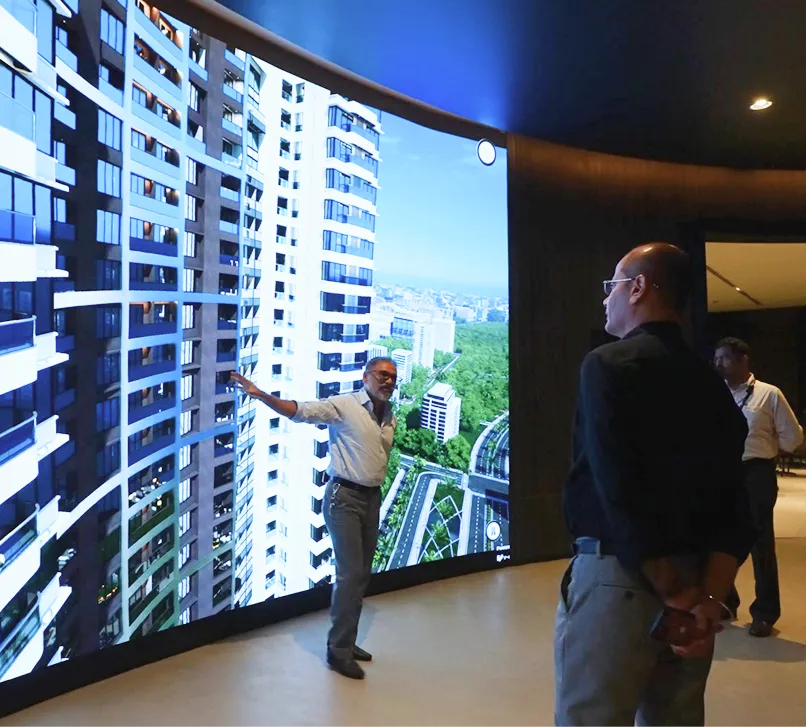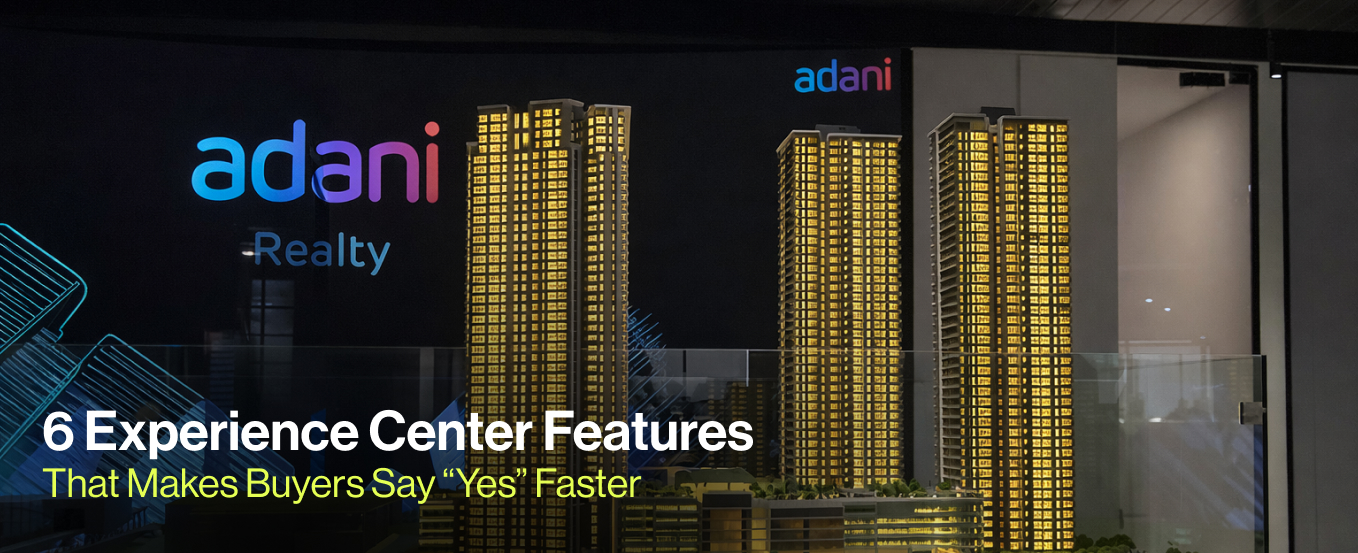
Sales momentum breaks when buyers cannot visualise outcomes. Offline experience centres close this gap. They replace assumptions with clarity, shorten approval cycles, and move decisions forward without delay.
Buyer friction in high-volume launches
Large residential launches create choice overload. Multiple towers. Many unit types. Varying views. Long delivery timelines.
Buyers struggle to picture scale, daylight quality, privacy levels, and daily access patterns. Sales teams repeat identical explanations across dozens of site visits.
Brochures compress reality into flat images. Physical show flats represent one layout only.
The result is hesitation. Hesitation delays bookings. Delays reduce momentum. Momentum loss increases negotiation pressure and weakens pricing power.
Dense developments in growth corridors face this friction visibly. Buyers compare floors, orientations, and amenity access in one visit. When answers remain abstract, trust weakens.
Trust weakens when proof is partial.
Experience-centre design for decision clarity
An offline experience centre must function as a decision engine. Not a display room. Not a spectacle.
A practical environment where buyers control exploration and see accurate outcomes.
V-estate structures this journey through offline activations. It combines photorealistic show flats, amenity mapping, neighbourhood context, and real-time visual controls into one guided flow.
The intent is operational clarity. Operational clarity converts faster than persuasion.
Feature one: photorealistic show flats aligned to specifications
Buyers need true scale. They need correct proportions. They need finishes that match the specification sheet exactly.
A photorealistic show flat aligned to carpet areas and material schedules removes doubt immediately. It shows circulation space. It shows storage depth. It shows furniture fit.
Precision reduces post-visit objections. Precision also protects developers from mismatch disputes later in the sales funnel.
When visuals mirror approved drawings, buyers move from evaluation to commitment faster.
Feature two: unit-specific window views and daylight context
The view is not cosmetic. It affects property value, privacy levels, and noise exposure.
A buyer who sees the exact sightline from a chosen stack understands the premium instantly. Time-of-day lighting reveals glare patterns, shade coverage, and heat behaviour.
Seasonal daylight context explains comfort across the year. Visual proof stabilises price discussions. It also limits repeated site visits before booking confirmation.
Projects near arterial roads or metro corridors need accurate view simulation to justify pricing differences between stacks.
Feature three: amenity and connectivity context in one frame
Buyers evaluate lifestyle beyond the apartment. Distance to daily needs. Access to transport. Proximity to future infrastructure.
When amenity placement and neighbourhood context appear together, buyers assess convenience in seconds. Compressed understanding accelerates decisions.
It also prevents later disappointment when promised convenience feels abstract during brochure-only presentations.
Developments near planned metro extensions or upcoming commercial hubs must surface this data during initial walkthroughs.
Feature four: real-time interior configuration
Choice should be visible immediately. Paint finishes. Furniture packs. Lighting tone.
These variables influence emotional comfort and perceived value directly. Real-time configuration lets buyers see outcomes instantly during the session.
The configuration selected becomes a reference for follow-up conversations. Immediate visual choice reduces later change requests. It also supports upsell with transparency, not pressure.
High-value inventory benefits when buyers need assurance about personalisation options before committing.
Feature five: guided sales flow with interaction capture
Offline does not mean disconnected from data. Each interaction reveals preference signals.
Layout interest. View preference. Finish selection. When captured during the experience-centre session, this data structures the next sales conversation.
Structured follow-ups close faster than generic callbacks. The sales team enters the next interaction with context. The buyer feels understood.
Marketing heads need this data to allocate sales resources efficiently and reduce dead leads in the pipeline.
Feature six: compliance-accurate visual governance
Visuals must reflect approved plans and RERA-aligned dimensions. Regular audits between design, sales, and legal prevent drift.
When the experience centre shows contract-accurate content, legal queries reduce. Accuracy protects velocity. It also protects brand trust when delivery timelines extend.
RERA-registered projects with complex tower phasing require this compliance layer to avoid mismatched deliverables during handover.
Operational fit for developers and marketing heads
The experience centre works when operations support speed. Sessions should be concise. Twenty minutes is sufficient when the flow is tight.
Staff scripts should focus on discovery and confirmation, not narration. Content governance must run on a monthly cadence to sync visuals with approvals and revisions.
Process discipline sustains conversion gains. Without governance, visual tools create risk instead of value.
Train sales teams to interpret interaction data. Captured preferences reveal buyer intent. Teams must close based on these signals, not generic pitches.
Conversion impact in practice
In high-density launches, buyers compare units within a single visit. When the experience centre presents unit scale, views, amenities, and connectivity in one continuous flow, buyers reach internal alignment sooner.
The negotiation window narrows because uncertainty is lower. Sales conversations shift from explanation to confirmation.
Confirmation closes deals. The experience centre also standardises how different sales teams present the project. This stabilises pricing conversations and reduces variance in promises made.
Track average session duration. Measure lead qualification rate after centre visits versus conventional show-flat walkthroughs. Log drop-off reasons in CRM after experience sessions.
Calculate conversion uplift compared to traditional sales processes. Use these metrics to justify deployment costs and replicate successful centres across multiple locations.
Risk control and cost efficiency
Traditional show flats are expensive and slow to refresh. They represent one configuration. Offline immersive centres cover multiple stacks without physical rebuilds.
When specifications change, content updates are faster than construction changes. Lower refresh cost preserves margins.
Risk reduces when visuals remain aligned to approvals and delivery scope throughout the sales cycle.
Relevance for multi-tower developments
Multi-tower projects with varied orientations and phased possession cycles demand clarity at scale. Buyers need to compare options quickly.
They need confidence in view corridors, amenity access, and daily commute context. An offline experience centre compresses this evaluation into one session.
Compression shortens the sales cycle. It also supports premium positioning for better views with defensible visual proof.
Projects spanning fifteen to twenty acres with multiple towers and staggered delivery dates face maximum buyer confusion. The experience centre reduces this ambiguity in one controlled session.
Action framework for project teams
Treat the experience centre as a conversion asset. Audit the top three buyer doubts heard this month. Map each doubt to one feature listed above.
Implement a focused offline flow that answers those three doubts clearly. Measure lead-to-booking movement over four weeks.
Scale only after the signal improves.
Start this week. Identify your three most common buyer objections. Build visual responses by next week. Deploy the minimum viable centre setup. Track conversion impact within thirty days.