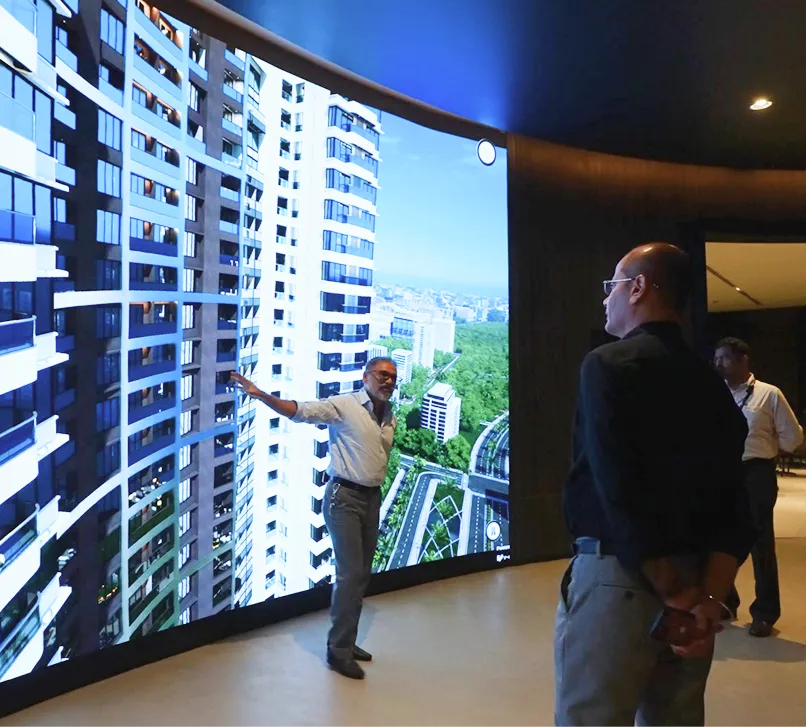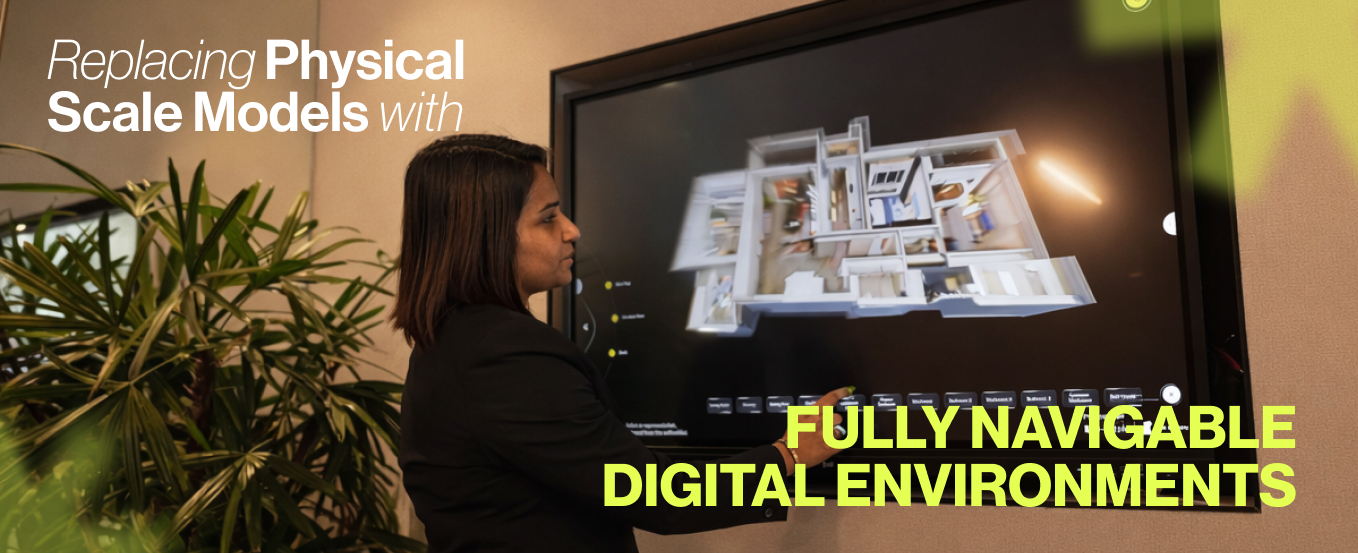
Physical scale models dominate real estate sales. They cost ₹5-10 lakhs per unit. Storage demands warehouse space. Maintenance runs continuously. Updates require complete rebuilds. Yet buyers still leave showrooms uncertain about spaces, light, and neighborhood fit.
Your sales budgets shrink. ROI declines. Buyers demand more. Something needs to change.
Physical Models: The Hidden Cost of Staying Traditional
Physical models carry buried expenses few teams quantify.
Construction costs hit hard. Custom fabrication, specialized teams, 6-8 week timelines. One floor plan change? Start over. The mold is useless. Assembly teams reassemble. Costs double.
Space consumes real estate. Warehouse square footage costs money. Climate control prevents damage. Insurance premiums accumulate. These operational expenses never appear on project budgets—but they drain cash flow continuously.
Transport risks everything. Insured shipping between offices and sites. One accident destroys months of investment. Models sit fragile, vulnerable, expensive to replace.
Buyer engagement remains weak. Clients view from fixed angles. They cannot explore freely. Natural light effects stay abstract. They cannot picture morning sun or evening glare. Neighborhood context disappears entirely.
Post-launch waste reaches 20-30%. After sales peak, models collect dust. Budget spent. Next project means new models, new costs. The cycle repeats endlessly.
Data tells the true story. Marketing teams cannot measure what drives conversions. They cannot identify which features matter most. They cannot nurture prospects effectively because engagement data does not exist. Buyer behavior remains a mystery.
The Market Has Changed. Your Sales Tools Haven't.
Today's buyers research obsessively before entering showrooms. They arrive informed. They expect interactivity. They demand customization. Generic presentations fail to differentiate you from competitors.
Sales teams waste energy on static presentations. Answering the same questions repeatedly. Showing the same angles from fixed perspectives. Prospects leave confused about spatial flow, natural light behavior, and neighborhood convenience.
Marketing departments struggle with accountability. Which features convert prospects? How long do they engage with specific areas? Where do objections cluster? Physical models provide zero insight. Budget allocation becomes guesswork.
Scaling creates compounding inefficiency. Multiple projects mean multiple models. Each costs money. Each demands storage. Each requires maintenance. Each provides no data.
Development timelines suffer. Months spent on model fabrication delay market entry. Pre-sales activities start late. Sales velocity suffers.
The competitive developers are already moving forward. They have shifted to fully immersive digital experiences that work offline, perform flawlessly, and generate measurable engagement data.
Digital Navigation: The Practical Solution
Fully navigable 3D digital environments eliminate every constraint of physical models.
Photorealistic rendering shows actual properties. Material textures match reality. Lighting behaves accurately. Spatial proportions reflect actual layouts. Buyers see their future home as it will truly appear—not imagined, not approximated.
Free navigation mirrors real-site visits. Users explore at their own pace. They walk from foyer into kitchen. They stand at windows to assess views. They move naturally through spaces. This freedom uncovers genuine interests. It reveals what matters to each specific buyer.
Customization drives early ownership psychology. Wall colors shift instantly. Furniture layouts adapt to preferences. Window treatments change. Buyers design their personal vision step-by-step. This involvement creates emotional investment. They have already begun decorating. Conversion becomes almost inevitable.
Neighborhood context becomes comprehensive. Schools, hospitals, transit hubs, dining options appear on integrated maps. Upcoming projects show future development. Connectivity details surface clearly. Buyers assess lifestyle fit, not just unit specifications. This complete picture accelerates decision confidence.
Dynamic Controls Reveal Real Property Performance
Static presentations ignore how properties actually perform in real conditions.
Lighting controls demonstrate seasonal impact. Morning sun angles throughout the year. Afternoon glare patterns. Evening light quality. Users adjust time-of-day settings and witness immediate effects. Does morning light reach the guest bedroom? Does afternoon heat hit the western wall? These answers appear on screen.
Weather variations show environmental performance. Rain affects visibility and ambiance. Fog alters depth perception. Clear skies reveal distant views. Users test different conditions to understand true property behavior across seasons and weather patterns.
Time-of-day shifts reveal lifestyle reality. Morning coffee at the balcony takes on meaning when users see actual dawn light. Evening relaxation changes character when sunset colors appear. These personal moments, visualized accurately, matter more than dimensions on floor plans.
Sales teams use these features to address objections before buyers voice them. The property demonstrates its own value.
Financial Impact: The Numbers That Matter
Cost efficiency and speed combine into compelling business case.
Fabrication expenses vanish. No specialized teams, no molds, no assembly. Digital builds leverage existing architectural expertise or low-cost contracted specialists.
Maintenance shrinks to zero. A staircase color change, unit layout adjustment, amenity addition—all execute instantly via software across every deployment simultaneously. Physical models demand disassembly and reconstruction.
Deployment scales dramatically. One digital environment serves multiple sales offices, satellite locations, and project kiosks simultaneously. Offline activation means full functionality without internet dependency.
Project launches accelerate 50%. Months redirected from model fabrication to marketing and pre-sales activities. Sales teams engage prospects faster. Market entry improves.
ROI doubles within quarters. Cost-per-demonstration drops sharply. Lead conversion climbs 30%. Retention improves 15% as buyers visualize their choice more clearly before commitment.
Team Productivity and Measurable Engagement
Field operations become more efficient and data-driven.
Training time collapses. Sales representatives master navigation in hours. Complex unit features become immediately visible. Client sessions flow naturally because the tool responds to genuine curiosity.
Engagement data informs strategy. Which features capture attention? When do prospects customize options? Where do questions cluster? This behavioral intelligence directs marketing focus.
Follow-up conversations gain precision. Prospects reference their customized layouts during callbacks. They describe specific scenarios they explored. Personalization creates connection. Nurture campaigns become targeted.
Implementation: The Straightforward Path Forward
Transition requires no complicated process.
Step 1: Digitize floor plans and site data. Scan existing layouts and neighborhood information.
Step 2: Build the core environment. 3D specialists construct the photorealistic model using actual project specifications.
Step 3: Layer dynamic features. Integrate neighborhood mappings, lighting controls, weather options, and customization tools.
Step 4: Test offline performance. Verify functionality on laptops, tablets, and kiosks without internet dependency.
Step 5: Train sales teams. Hands-on sessions focus on demonstration flow and common prospect questions.
Timeline: 4-6 weeks. Pilot with one project. Results inform broader deployment strategy.
Why This Matters for Your Leadership Team
For Marketing Heads: Scalable, measurable tools replace repetitive model fabrication. Engagement data reveals what drives conversions. Budget allocation becomes strategic, not reactive.
For Development Teams: Cost control improves immediately. Time-to-revenue accelerates. New projects integrate existing digital frameworks rather than starting from scratch. Maintenance expenses disappear.
For Sales Leadership: Team productivity increases. Prospect engagement deepens. Conversion rates climb. Follow-up precision improves. Buyers make faster decisions based on clearer information.