There Is a Specific Reason Buyers Do Not Decide
Ask any real estate sales head what the biggest challenge is, and you will hear some version of the same answer.
"Buyers take too long." "They are interested but not committed." "We do three follow-ups and then they go cold."
This is described as a buyer problem. It is not.
It is a visualization problem. And it is entirely within the developer's control to fix.
What the Visualization Gap Actually Is
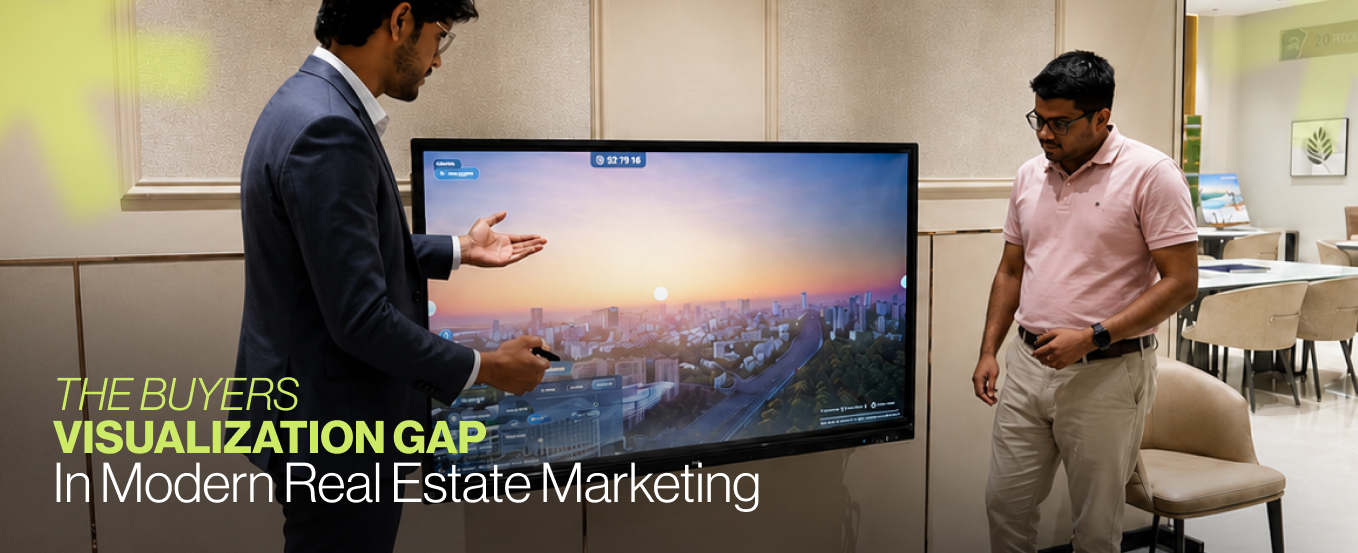
The buyer visualization gap is the distance between what you are showing buyers and what they need to see in order to decide.
Every developer shows buyers something. Renders. Brochures. Floor plans. Videos. Physical models. Site visits. Scale models in glass cases.
None of these collapse the gap between imagination and certainty.
The buyer looks at all of this material and still has to do significant mental work to answer the question: "Can I see myself living here?"
When that mental work is too hard, buyers delay. Not because they are not interested. Because the cognitive effort required to imagine a finished product from incomplete inputs is genuinely demanding.
The developer who removes that effort wins the deal.
Why Traditional Marketing Collateral Has a Ceiling
Real estate marketing has evolved significantly over the past decade. CGI renders are now photorealistic. Videos are cinematic. Brochures are designed by world-class studios.
And yet, conversion rates on pre-launch and under-construction projects remain a persistent challenge across the industry.
The reason is that marketing collateral, however beautiful, is passive. The buyer receives it. Look at it. Put it down.
The visualization gap is not closed by better graphics. It is closed by immersive, interactive experience — where the buyer is inside the property, not outside looking at it.
Hubtown and the Shift to Immersive Buyer Engagement
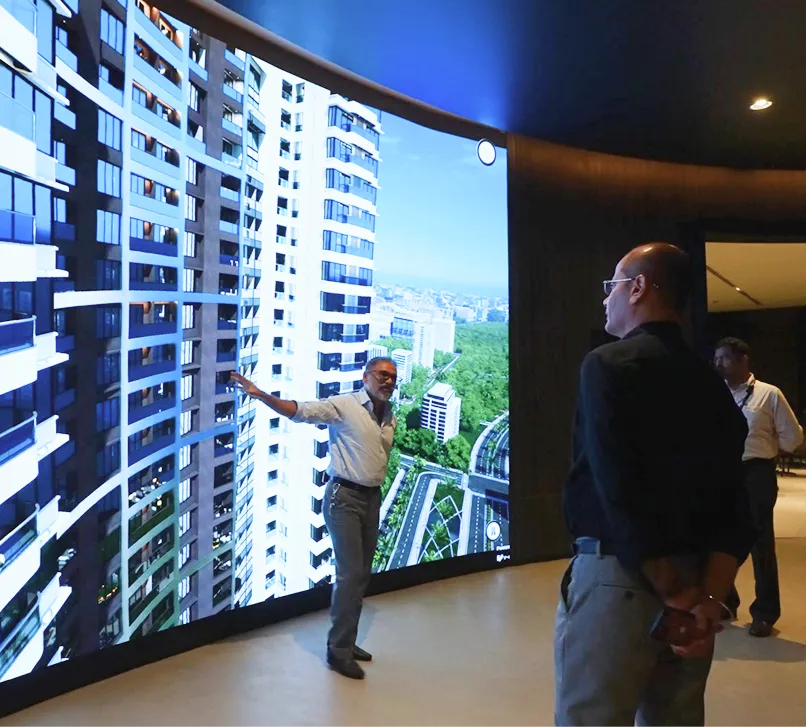
Hubtown, a developer known for large-scale residential and mixed-use developments in the Mumbai metropolitan region, faced a specific challenge. Their projects were complex. Multiple towers, varied configurations, extensive amenity zones. Explaining the full scope of the project to a buyer in a single sales meeting was nearly impossible with traditional tools.
By deploying V-estate's interactive 3D sales platform at their experience center, Hubtown transformed this challenge into an advantage.
Buyers could navigate the entire project. Not just their specific unit — the full development. They could understand how the amenity zones connected to the residential towers. They could see the connectivity to surrounding infrastructure. They could visualize the lifestyle the development was offering, not just the apartment within it.
This comprehensive visual experience made complex projects simpler to sell. Buyers did not leave with more questions. They left with clarity.
The Three Dimensions of the Visualization Gap
Understanding where the gap lives helps in closing it.
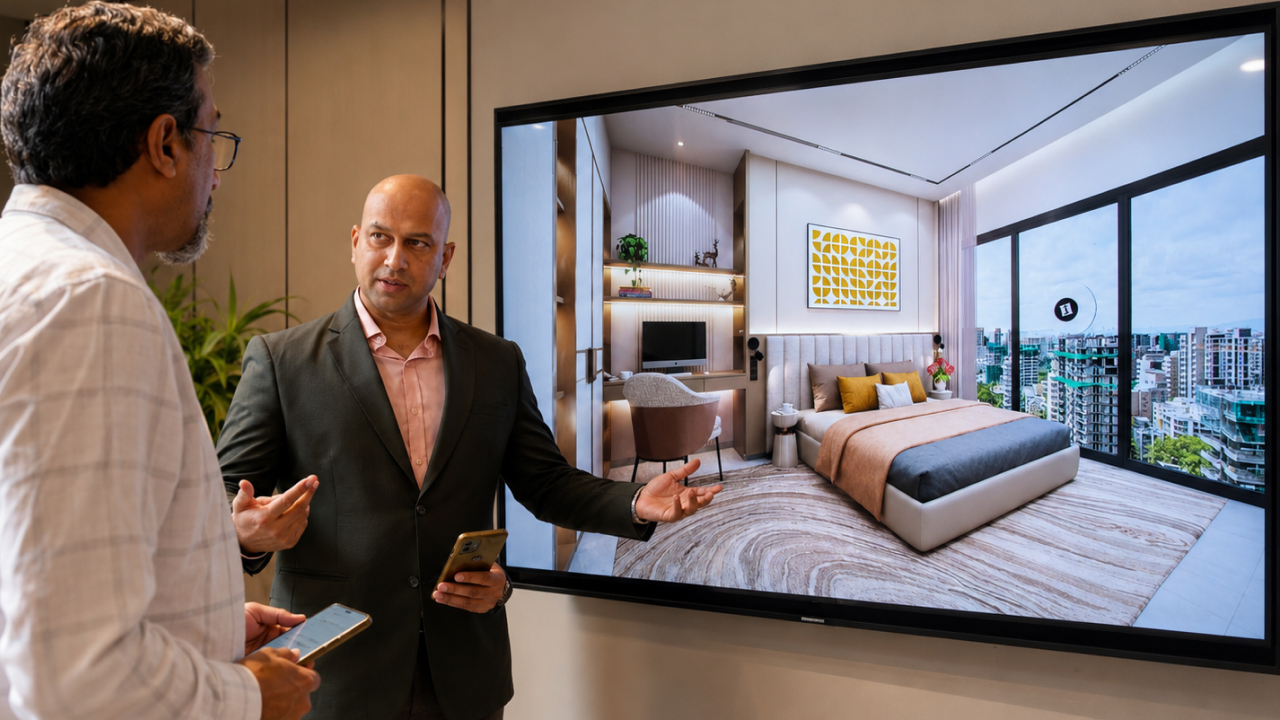
The first dimension is unit-level visualization. Can the buyer see their specific apartment — the actual floor, the actual orientation, the actual configuration — in realistic detail? Not an artist's impression. The real thing.
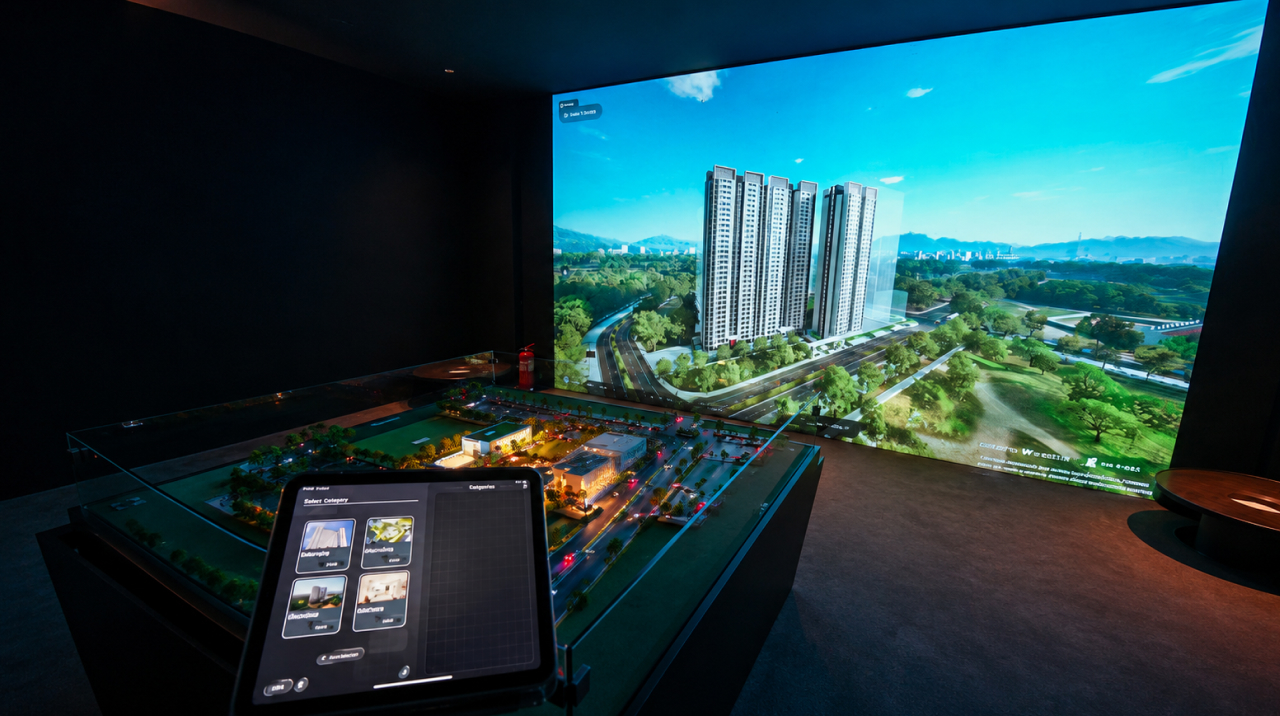
The second dimension is project-level visualization. Can the buyer understand how the full development works? Where the entrance is relative to their tower? How far the swimming pool is from their unit? What the landscaped gardens look like when standing at ground level?
The third dimension is lifestyle visualization. Can the buyer see how they will live here? The coffee on the balcony in the morning. The children playing in the dedicated play zone. The evening walk on the podium level.
All three dimensions matter. Most developers close only one — unit-level — with their current tools. V-estate closes all three.
Dynamic Environment: The Feature That Makes Visualization Real
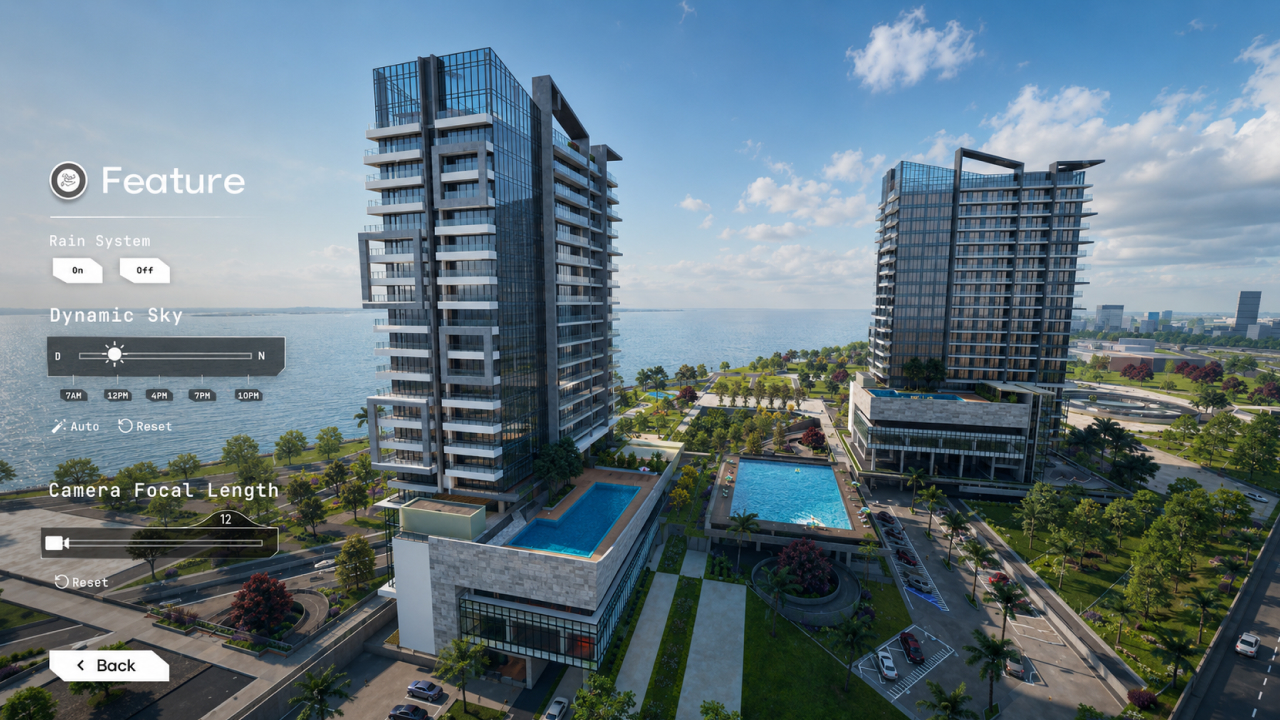
One of the most technically sophisticated and commercially valuable features in V-estate is dynamic environmental simulation.
Buyers can control the time of day and the weather condition during their virtual walkthrough. They can see how the property looks at 7 AM in January. At 3 PM in June. At 9 PM on a clear night.
This addresses a specific buyer concern that no render or brochure can address: how will this space feel to live in, across all the moments that matter?
A buyer who can verify that their bedroom is not directly facing the afternoon sun, that their living room gets gentle morning light, and that the view from the balcony is unobstructed at night — that buyer is not guessing. They are deciding.
Vicinity Mapping: Selling the Neighbourhood, Not Just the Unit
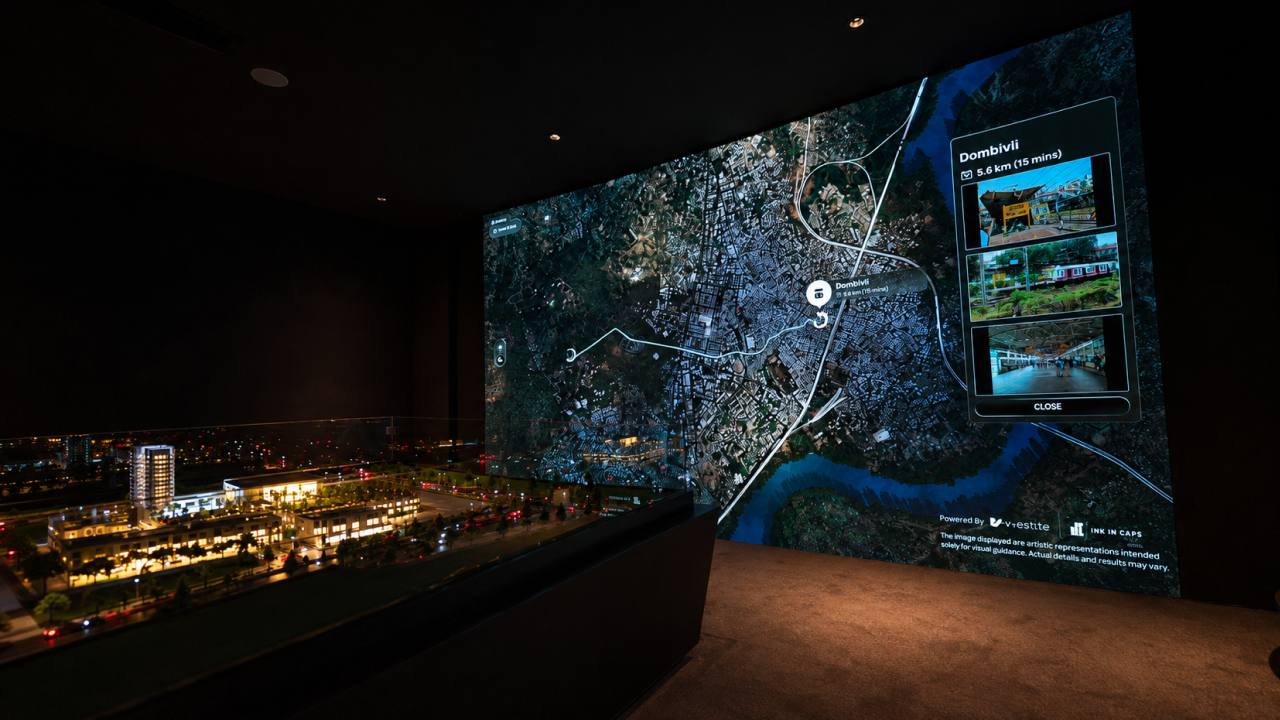
First-time luxury buyers and seasoned investors alike evaluate location with equal seriousness.
But location is notoriously hard to communicate in a sales setting. You can show a map. You can list nearby schools and hospitals. But you cannot easily convey the sense of connectivity and lifestyle that a neighborhood offers.
V-estate's vicinity mapping module visualizes the surrounding ecosystem. Schools, hospitals, shopping centers, transit hubs — current and upcoming. Including infrastructure that is planned but not yet built.
For a developer selling a project near an upcoming metro line or a new commercial zone, this is an invaluable tool. You can show the buyer exactly how their location advantage will grow over time. That is a conversation about future value — the most powerful selling argument in real estate.
What Happens When You Close the Visualization Gap

The commercial outcomes are consistent across V-estate's client portfolio.
Sales cycles shorten. Fortune Group reported a 30% reduction. Buyers who previously needed multiple visits and weeks of deliberation were deciding within the initial engagement.
Objection rates fall. When buyers can see the product clearly, objections about finish quality, layout concerns, and location uncertainty decrease significantly.
Lead quality improves. Buyers who have experienced an immersive walkthrough arrive at later conversations more decided. The sales team spends less time on education and more time on closing.
And conversion rates across the board — on pre-launch, under-construction, and ready-to-move inventory — improve because the buyer has the one thing they needed to decide: a complete, convincing picture of their future home.
The Marketing Head's Takeaway
If you are a marketing head or sales director reviewing your conversion funnel, ask one question.
At the moment of highest buyer intent — when the buyer is in your experience center or sales office, engaged and open — what are you giving them?
If the answer is a brochure, a floor plan, and a sales rep pointing at a scale model, the visualization gap is wide open. And it is costing you deals that should be yours.
Closing that gap is not a technology project. It is a sales strategy decision. The technology exists. The results are documented. The only question is whether you are ready to give your buyers the experience they need to say yes.