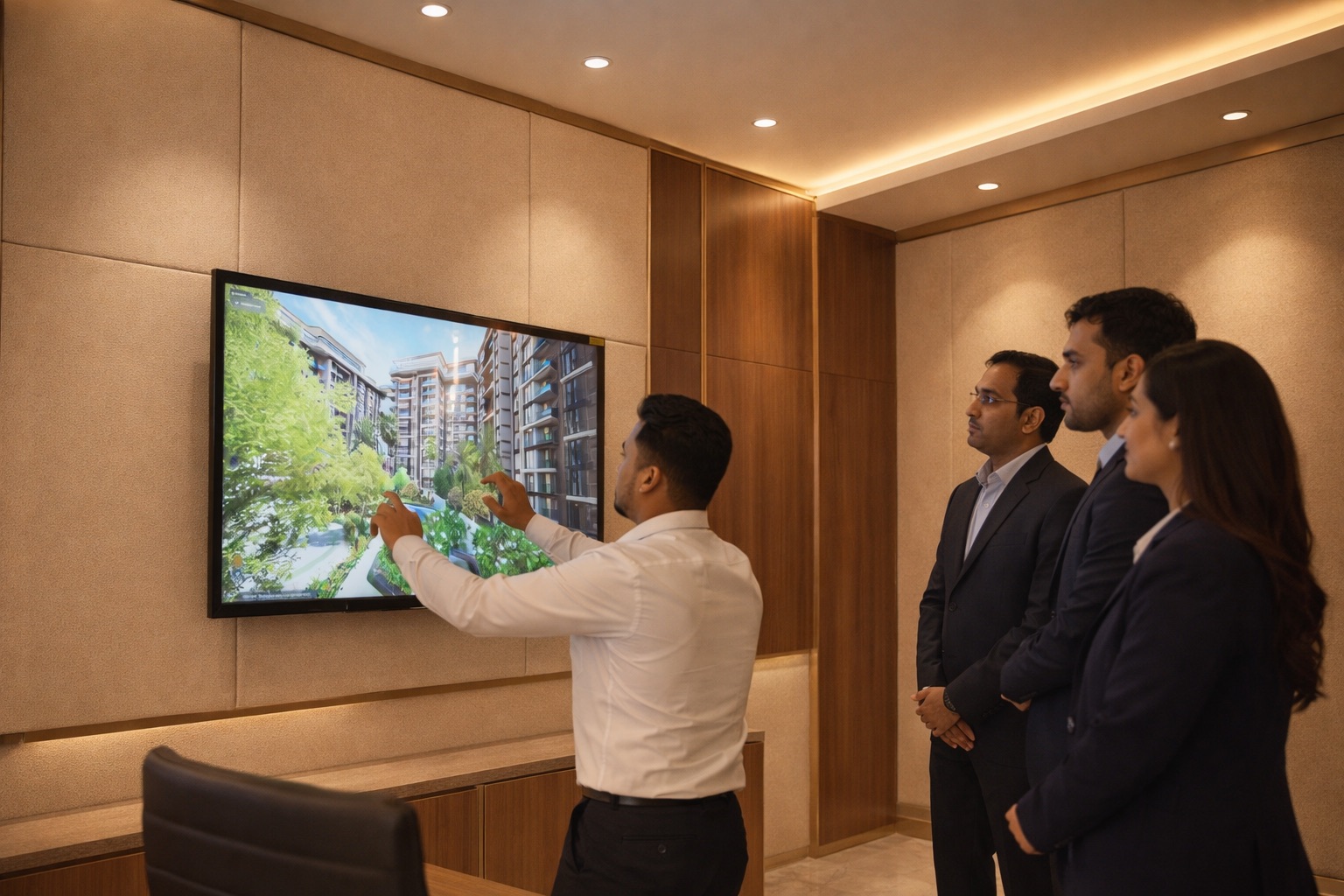
You launched the project. The listing went live. Traffic started coming in — hundreds of visitors in the first few hours, and for a moment, everything felt like it was working. But then the site visits didn't follow. The inquiries stayed quiet. The leads that did come in felt thin, uncommitted, easy to lose. You refreshed the analytics, and there it was — average time on page, one minute fifty-two seconds. Buyers were arriving, looking around for less than two minutes, and walking away without a word. Not to a competitor. Not to a better project. Just gone.
And the hardest part wasn't the numbers — it was knowing that your project was good, the location was right, the pricing was fair, and none of that mattered because buyers were leaving before they ever gave it a real chance. That is the problem nobody in real estate talks about openly, and it is quietly costing developers crores in unconverted revenue every single month.

The Metric Nobody Measures Until Real Estate Experiential Technology Changes It
Open your analytics right now and find one number — average time on page for your property listing. For most developers, it sits somewhere between 90 seconds and 3 minutes. That number tells a story most marketing teams never stop to read.
In those two minutes, a buyer has:
Looked at 3 to 4 photos
Glanced at the floor plan
Maybe skimmed the specs
Decided whether to stay or leave
That's it. Two minutes to win someone's attention on a decision that will shape the next twenty years of their life. And most projects are losing that battle every single day, quietly, invisibly, without anyone flagging it in the weekly marketing meeting.
The tragedy is that developers are pouring money into better photography, sharper copywriting, and expensive paid traffic — all fighting over those same two minutes. But two minutes simply isn't enough time for anyone to truly understand a space through static images and flat floor plans. That's exactly where real estate experiential technology changes everything.
Why Static Floor Plans Fail And Why Real Estate Experiential Technology Solves It
Floor plans are specifications. They are blueprints, technical drawings, architectural documents built for engineers — not for families trying to imagine their lives inside a space.
When a buyer looks at a static floor plan, they are attempting something genuinely difficult:
Visualizing 3D space from a 2D drawing
Imagining themselves moving through room to room
Understanding how spaces connect and flow
Picturing their furniture, their mornings, their routines
Assessing natural light without ever standing inside
This cognitive effort is exhausting. Most buyers quietly give up after 90 seconds and scroll to the next project — one that might be smaller, less thoughtfully designed, priced higher — but easier to understand at a glance. You didn't lose them because your project was inferior. You lost them because understanding your project asked too much of them, too fast.
The Experience Shift That Real Estate Experiential Technology Creates
Real estate experiential technology does something simple but transformative — it stops asking buyers to imagine the space and starts letting them experience it.
Instead of a flat drawing, buyers can walk through the unit in 3D. They can see how the living room opens onto the balcony, how light moves through the master bedroom in the morning, how the kitchen connects to the dining area. They can place furniture, explore finishes, and feel the flow of the space at their own pace. That shift — from imagination to experience — is where real engagement begins. Buyers spend more time. They go deeper. They arrive at decisions faster. And those decisions lead to site visits, conversations, and closures.
The L&T Bengaluru Case Study: How Real Estate Experiential Technology Took Sessions From 2 Minutes to 12 Minutes
L&T's premium project in Bengaluru was facing exactly this challenge. The traffic was strong — 4,500 unique visitors every month landing on the property page. But only 340 of them were booking site visits, a conversion rate of 7.5%, well below the industry benchmark of 15 to 18% for premium residential.
When the marketing team dug into the data, the answer was sitting right there. Average time on page: one minute fifty-two seconds. Buyers were leaving before they finished the first scroll. The floor plan was barely touched. The project description was skipped entirely. They weren't rejecting the project. They simply couldn't understand it fast enough to stay.
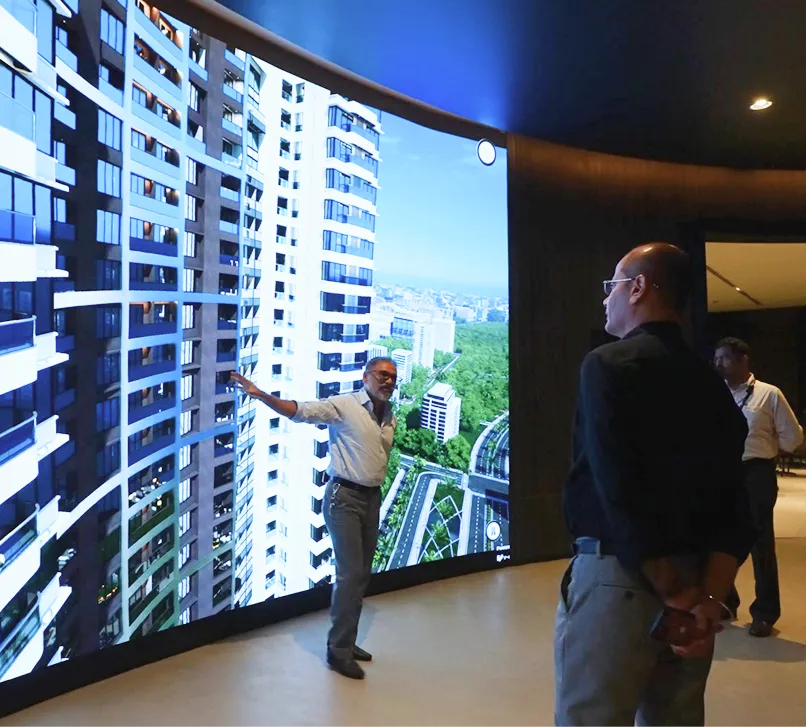
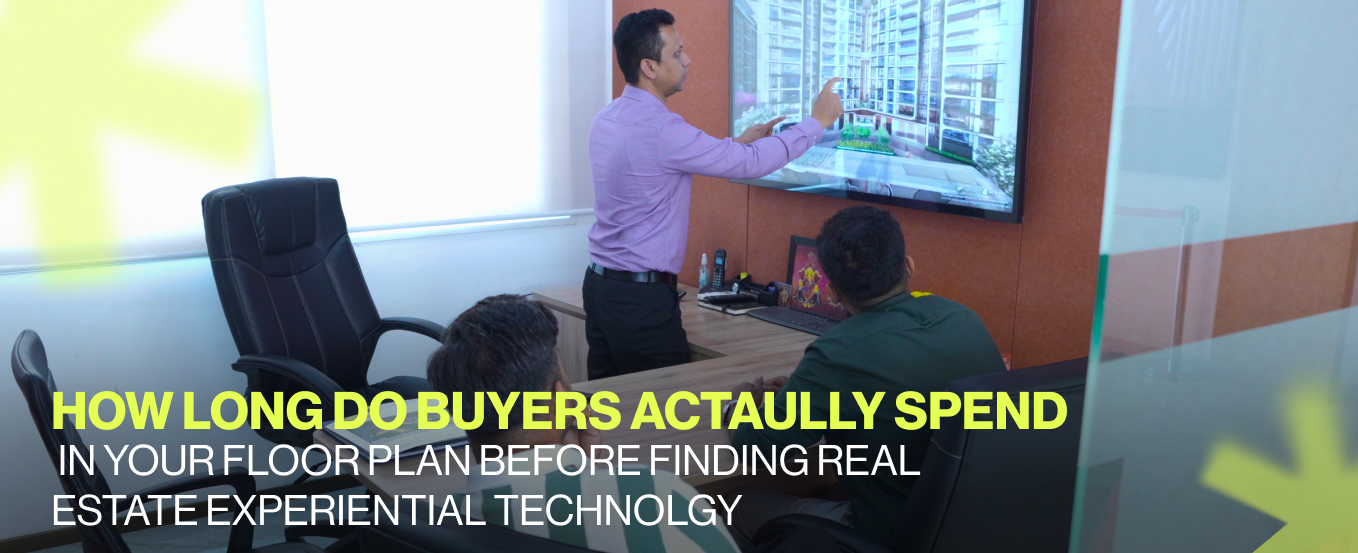
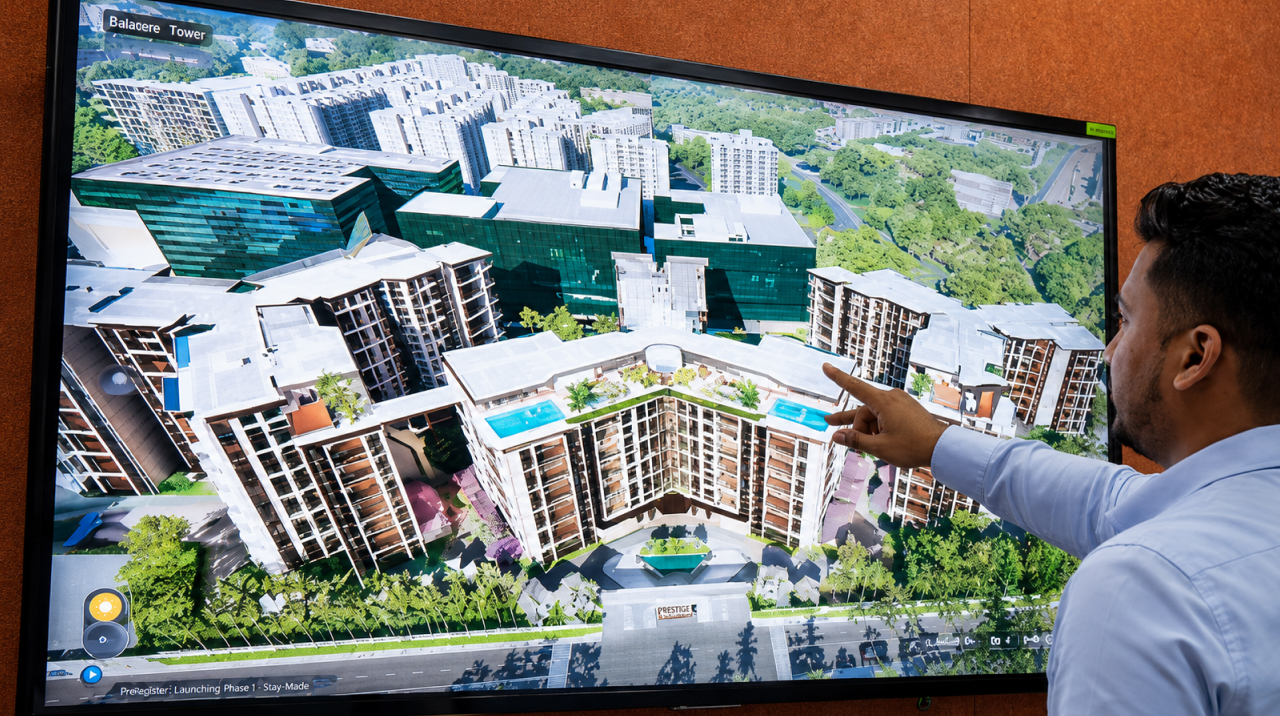
L&T partnered with Vestate to embed an immersive real estate experience centre directly into the property listing. The implementation included:
An interactive 3D model of the full project, exterior and interior
Immersive walkthroughs letting buyers navigate unit interiors at their own pace
Customizable views showing different finishes, furniture layouts, and configurations
360° neighborhood views connecting the property to its location
Material and specification details accessible within the experience itself
The results came fast. Within six weeks:
Average time on page jumped from 1:52 to 11:43
Site visit conversion rose from 7.5% to 18.2%
Lead quality improved significantly — fewer casual browsers, more serious prospects
Close rate among immersive experience viewers reached 38%
But the shift that mattered most wasn't in the metrics. It was in the sales conversations. Buyers arriving for site visits had already explored the property thoroughly online. They came with specific questions, not fundamental doubts. The sales team stopped explaining what the project was and started discussing what it could mean for each buyer personally. That is a completely different kind of conversation — and a far more effective one.
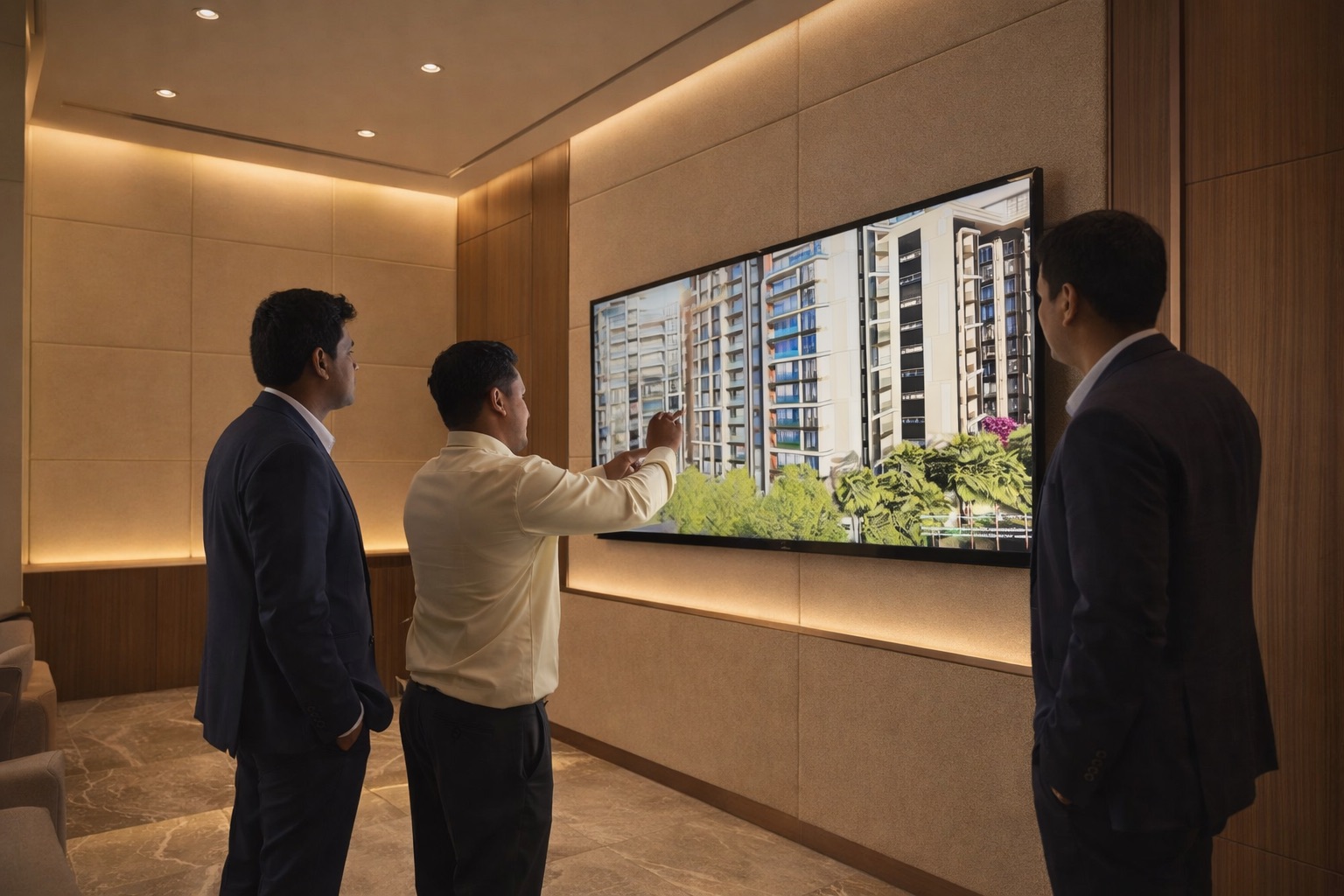
Why Time on Page Matters More Than You Think in Real Estate Experiential Technology
Engagement time is a proxy for buyer confidence. The longer someone spends exploring a property, the more questions they have answered, the more they have visualized themselves living there, and the closer they have moved from maybe to probably.
When someone spends 12 minutes inside a property experience versus 2 minutes on a static page, they arrive at the sales conversation in a completely different state of mind. They are not starting from zero. They are already halfway there.
Real estate experiential technology extends time on page by making exploration genuinely rewarding. It replaces the cognitive effort of deciphering drawings with the pleasure of discovering a space. That is why time on page increased nearly six times in the L&T case — not because buyers were forced to stay longer, but because they wanted to.
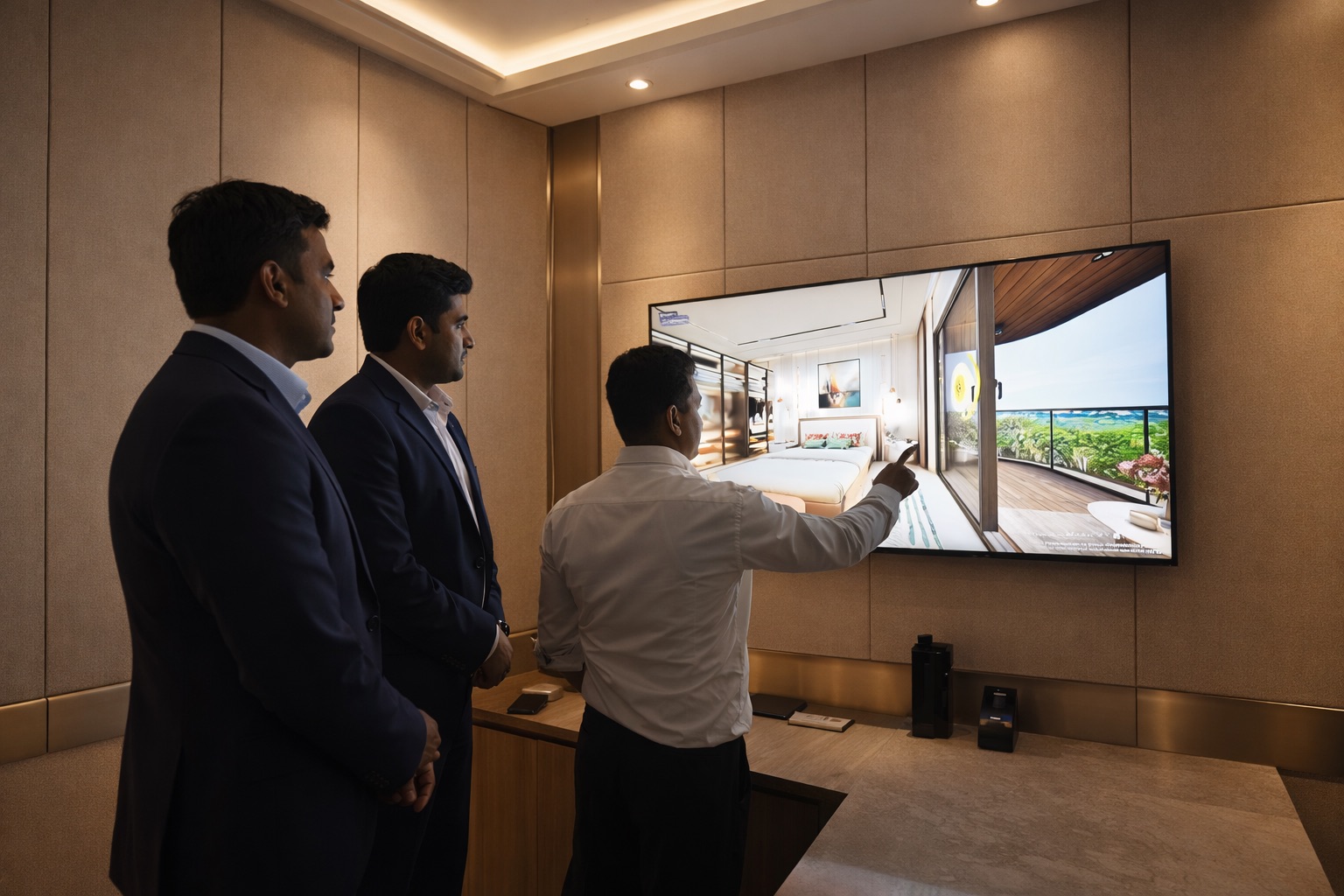
The Business Case for Real Estate Experiential Technology in Plain Numbers
For any developer evaluating this decision, the math is straightforward.
Before real estate experiential technology, L&T's project was generating:
4,500 monthly unique visitors
340 site visits at 7.5% conversion
27 units closed monthly at an 8% close rate
After implementation:
4,500 monthly unique visitors — unchanged
819 site visits at 18.2% conversion
311 units closed monthly at a 38% close rate
That is 284 additional units closed every month. At an average unit price of ₹1.2 crore, that translates to over ₹340 crores in additional annual revenue. The investment in real estate experiential technology setup was ₹12 lakhs. The payback period was 10 days.
For marketing heads and developers, this is not an experimental technology decision. It is a revenue decision.
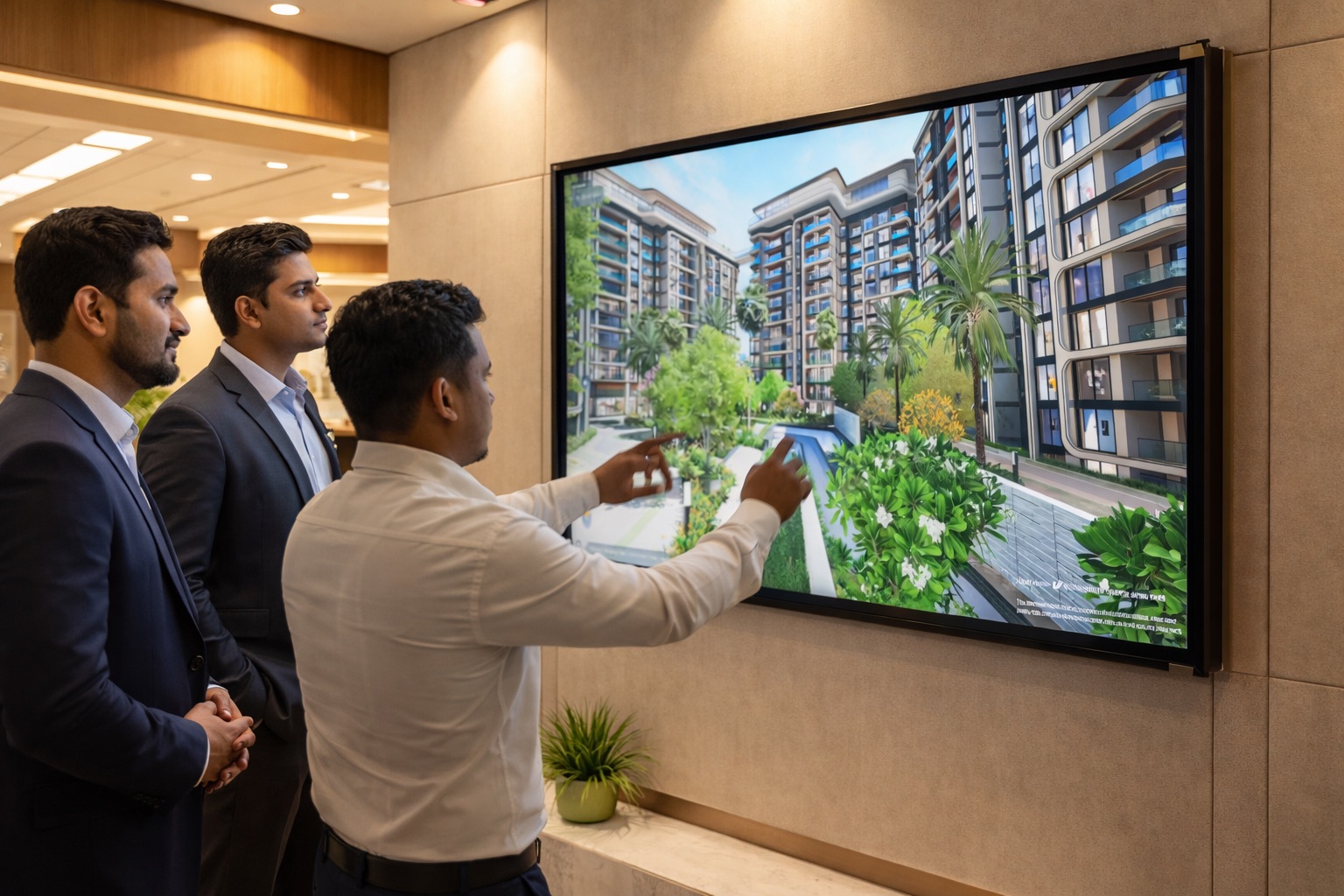
The Psychology Behind Real Estate Experiential Technology
This isn't magic. It is behavioral science working exactly as it should.
When buyers engage with real estate experiential technology instead of static floor plans, two things happen simultaneously. First, cognitive load drops. A 3D walkthrough is simply easier to process than a 2D drawing. Buyers retain more, understand more, and feel more confident in less time. Second, emotional connection forms. When someone can see themselves standing in that kitchen, sitting on that balcony, watching the sun move through that living room — the property stops being a listing and starts feeling like a home. And emotional connection is what drives real estate decisions more than any specification sheet ever could.
How Real Estate Experiential Technology Fits Into Your Existing Sales Process
The most common concern from marketing leaders is straightforward — will this complicate the existing sales process?
It won't. Real estate experiential technology works within your current property listing page. It does not replace your photography, your floor plans, or your project description. It sits alongside them, adding a layer of depth that static content cannot provide.
The integration is clean:
An embedded 3D viewer lives directly on the property page
It works across mobile, tablet, and desktop without friction
Engagement data feeds into your existing analytics and CRM
It shows you exactly which parts of the project buyers explore most
No new sales process. No new team. Just better-informed, more confident leads arriving at your sales office already sold on the project in principle.