Somewhere in every buyer's research journey, there is a single moment that changes everything. It is the moment they stop browsing and start committing — the moment they pick up the phone, fill out the site visit form, or turn to their spouse and say "I want to see this one in person." That moment is not random, and it is not triggered by better photography or more compelling copy. It is triggered by one specific realization: this project is worth my time. And that realization only comes after a buyer has developed genuine confidence in the space they are considering.
The problem is that most projects never give buyers the tools to reach that moment. They offer photos, specifications, and flat floor plans — and then wonder why traffic is strong but bookings are weak. Without immersive property walkthrough technology, most buyers hit a wall during the visualization stage and quietly move on to a project that makes it easier to imagine living there. With it, that booking moment happens consistently, predictably, and far faster than any traditional marketing approach can achieve.
The Confidence-to-Booking Pipeline That Immersive Property Walkthrough Technology Unlocks
Every buyer moves through the same journey before they commit to a site visit. They become aware of a project through ads, search, or referrals. They research the basics — photos, specs, location, pricing. They try to evaluate the space meaningfully. They attempt to visualize themselves actually living there. And if that visualization succeeds, confidence follows — and booking follows confidence.
Most projects fail at the visualization stage. Buyers cannot see themselves inside a 2D floor plan. Without visualization there is no genuine confidence, and without confidence there is no booking. Immersive property walkthrough technology removes that bottleneck entirely. It enables visualization, builds confidence, and triggers the booking decision — consistently, at scale, across every buyer type.
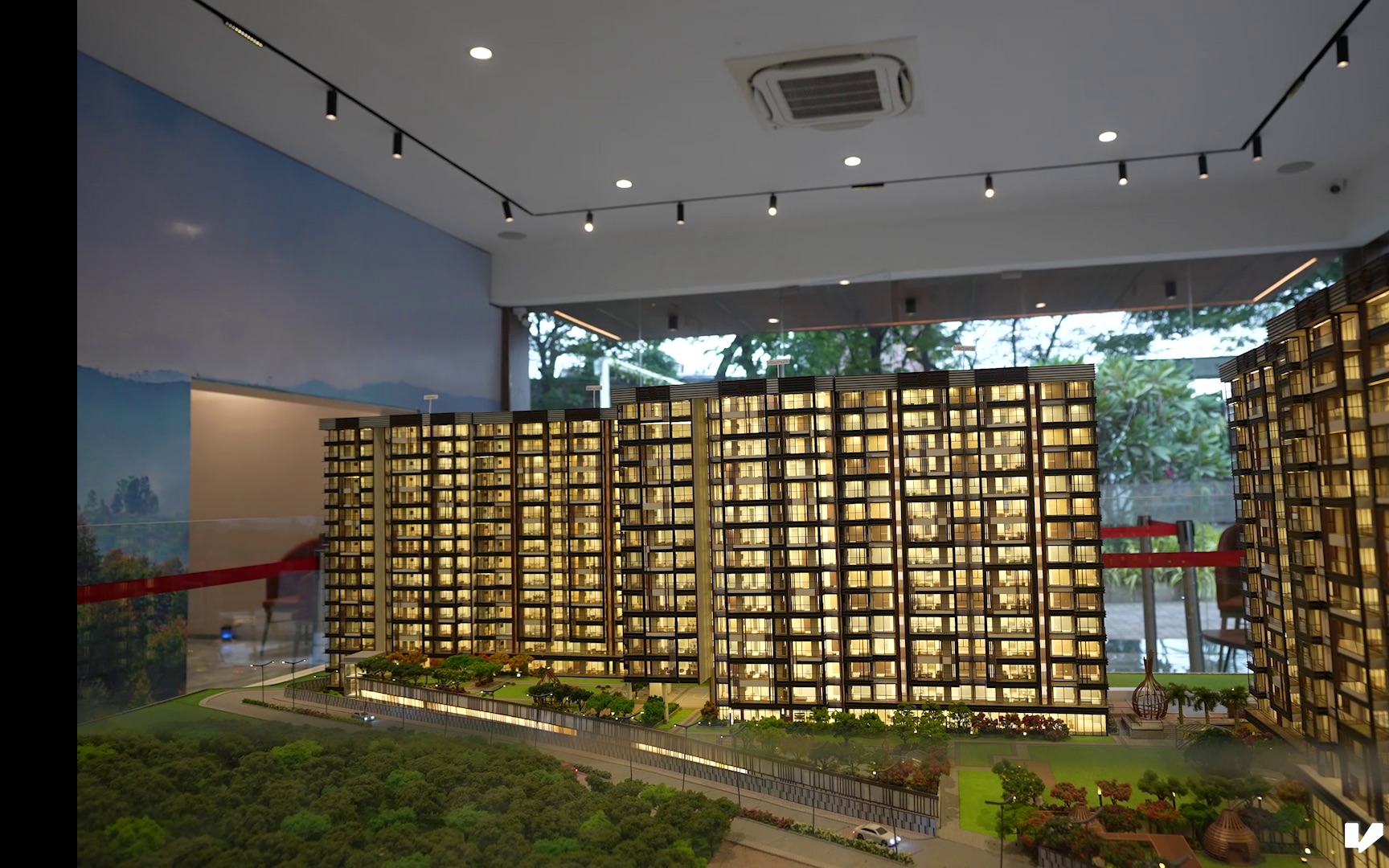
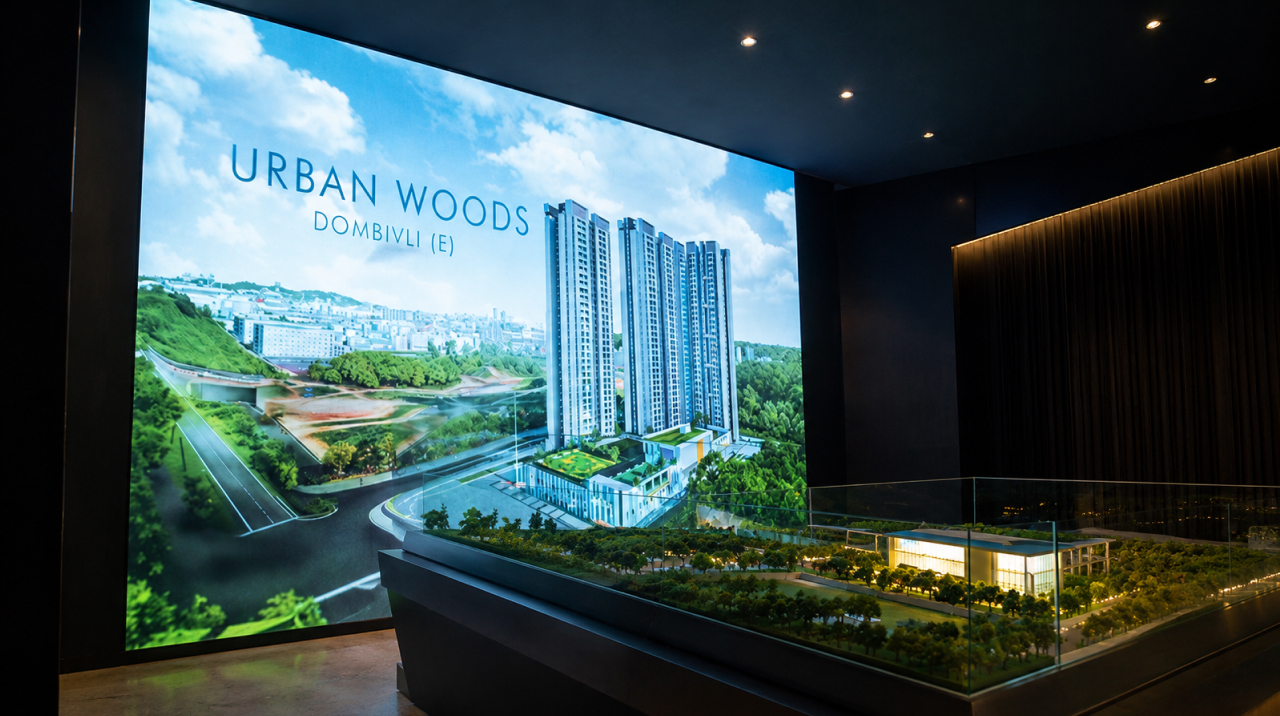
The Rustomjee Urban Woods Case Study: How Immersive Property Walkthrough Technology Accelerated Bookings by 264%
Rustomjee's mixed-use project in a premium location was attracting strong traffic — 5,400 monthly website visitors landing on the property page. But site visit bookings were deeply disappointing relative to that traffic. Only 340 buyers per month were converting to bookings, a rate of just 6.3%. The team knew the product was strong. The location was right. The pricing was competitive. Something fundamental was missing from the buyer experience — and that something was the ability to truly experience the space before committing to a visit.
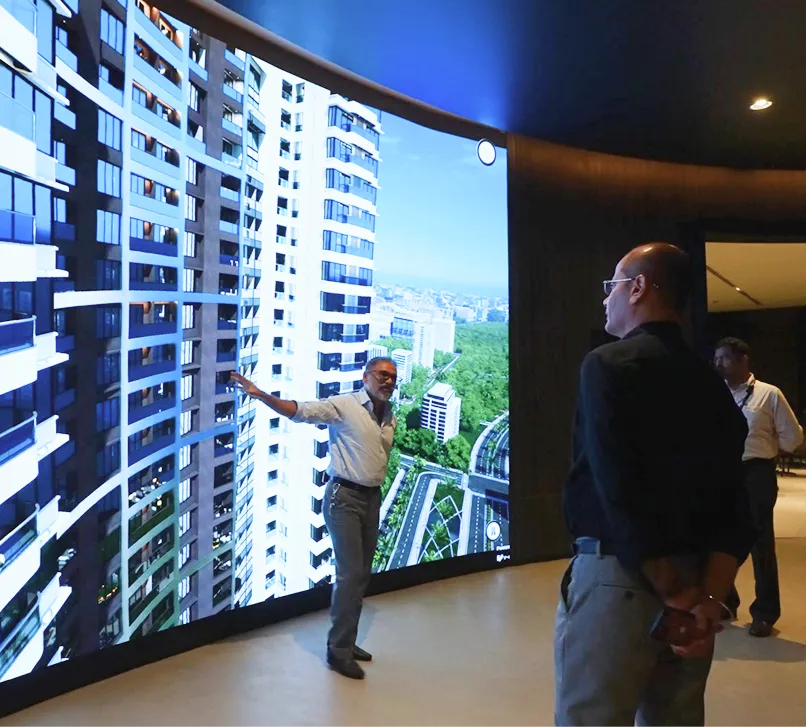
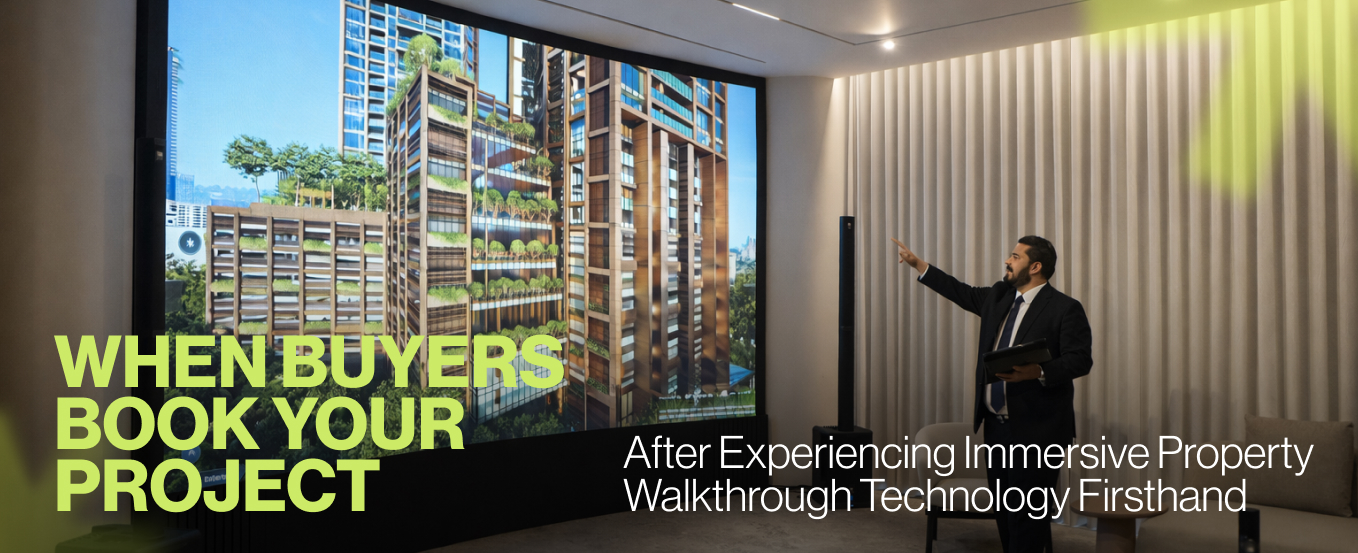
Rustomjee implemented Vestate's immersive property walkthrough technology with a comprehensive setup designed to answer every question a serious buyer might have before picking up the phone. The implementation included:
A photogrammetric 3D model of the entire project covering all exterior spaces and every unit type
Immersive walkthroughs allowing buyers to navigate freely through interiors at their own pace
Multiple finish options customizable to individual buyer preferences in real time
Material detail layers showing actual specifications within the immersive experience
Neighborhood context through 360° external views connecting the project to its surroundings
Full amenity exploration embedded within the immersive environment
Floor plan integration showing layout context while navigating the 3D space simultaneously
The impact on booking behavior was immediate and dramatic. Within eight weeks:
Site visit bookings increased from 340 to 1,240 — a 264% increase
Booking conversion from website traffic jumped from 6.3% to 23%
78% of all bookings came directly from immersive property walkthrough technology users
Average engagement time before booking reached 19 minutes
Time from website visit to booking decision dropped from 32 minutes to just 8 minutes
But the numbers that mattered most were not about volume. They were about quality. Buyers who booked after experiencing immersive property walkthrough technology were fundamentally different from the casual inquiries the project had been receiving before. Their no-show rate dropped from 22% to just 2%. 80% arrived at site visits with specific, informed questions compared to 15% previously. Close cycles shortened by 18%. And buyer confidence, measured through post-visit NPS surveys, increased by 42 points. These were not casual browsers — they were committed buyers who had already made a partial decision before they ever stepped through the door.
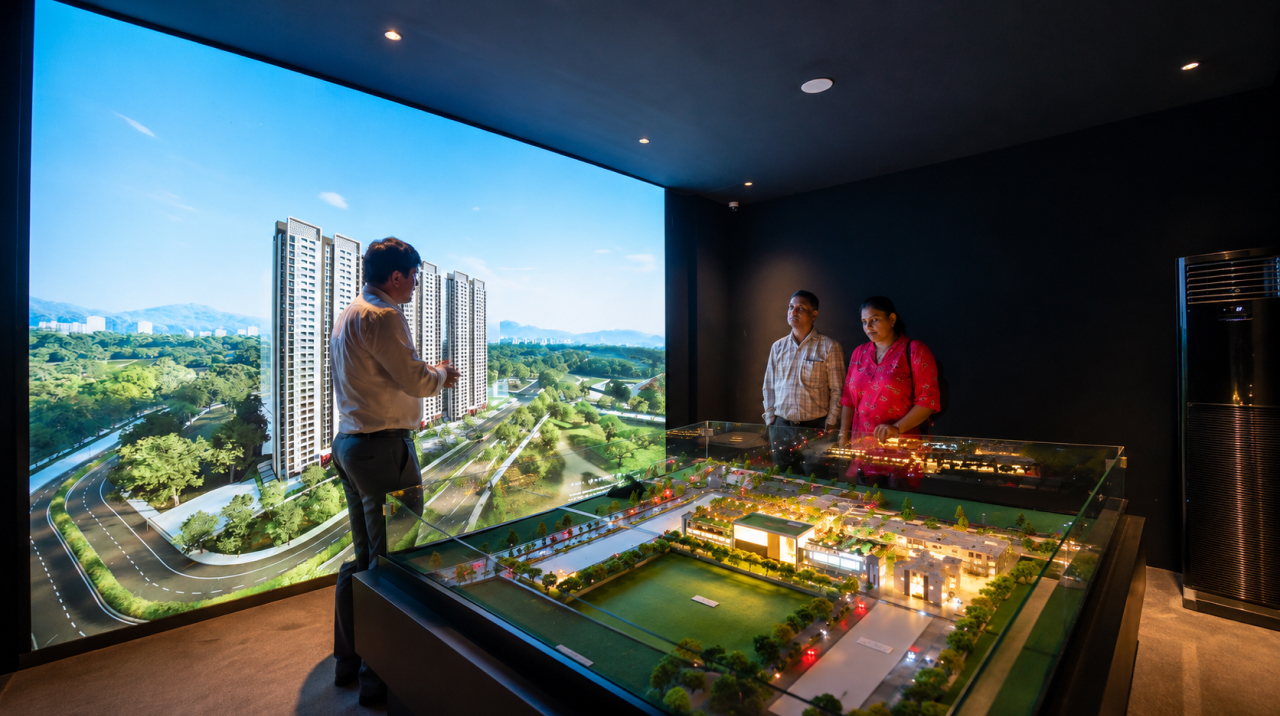
What Changes Psychologically With Immersive Property Walkthrough Technology
The shift from browsing to booking is not just a behavioral change. It is a psychological one. When a buyer experiences immersive property walkthrough technology, something fundamental shifts in how they perceive the project — it stops being a listing and starts feeling real. They can walk through the space rather than squinting at a floor plan. They understand proportions intuitively rather than trying to calculate them abstractly. They feel the relationship between rooms. They can place their furniture, picture their family, imagine their morning routine in that specific kitchen with that specific light at that specific time of day.
That visualization creates emotional connection, and emotional connection is what drives commitment. The booking decision stops being a leap of faith and becomes a logical next step — because the buyer already knows, at some level, that this is the right project for them. Immersive property walkthrough technology does not persuade buyers. It gives them the information they need to persuade themselves.
Why Immersive Property Walkthrough Technology Compresses the Booking Timeline
One of the most revealing metrics from the Rustomjee case was the dramatic drop in time from website visit to booking — from 32 minutes down to 8 minutes. That compression is not accidental. It reflects something fundamental about how immersive property walkthrough technology changes the information gathering process for buyers.
Without immersive technology, a buyer spends 30 minutes or more piecing together a mental picture from multiple photos, a flat floor plan, a written description, and their own imagination — and still finishes with significant uncertainty. With immersive property walkthrough technology, that same buyer spends five minutes navigating the actual space, reaches genuine confidence, and picks up the phone. The evaluation timeline compresses because the quality of information available in those five minutes is dramatically higher than anything static content can deliver in half an hour.
For developers, this compression has direct business consequences:
Faster booking volume from the same traffic base
Higher conversion velocity across the entire sales pipeline
More efficient marketing spend per qualified booking
Better lead quality because serious buyers self-select faster
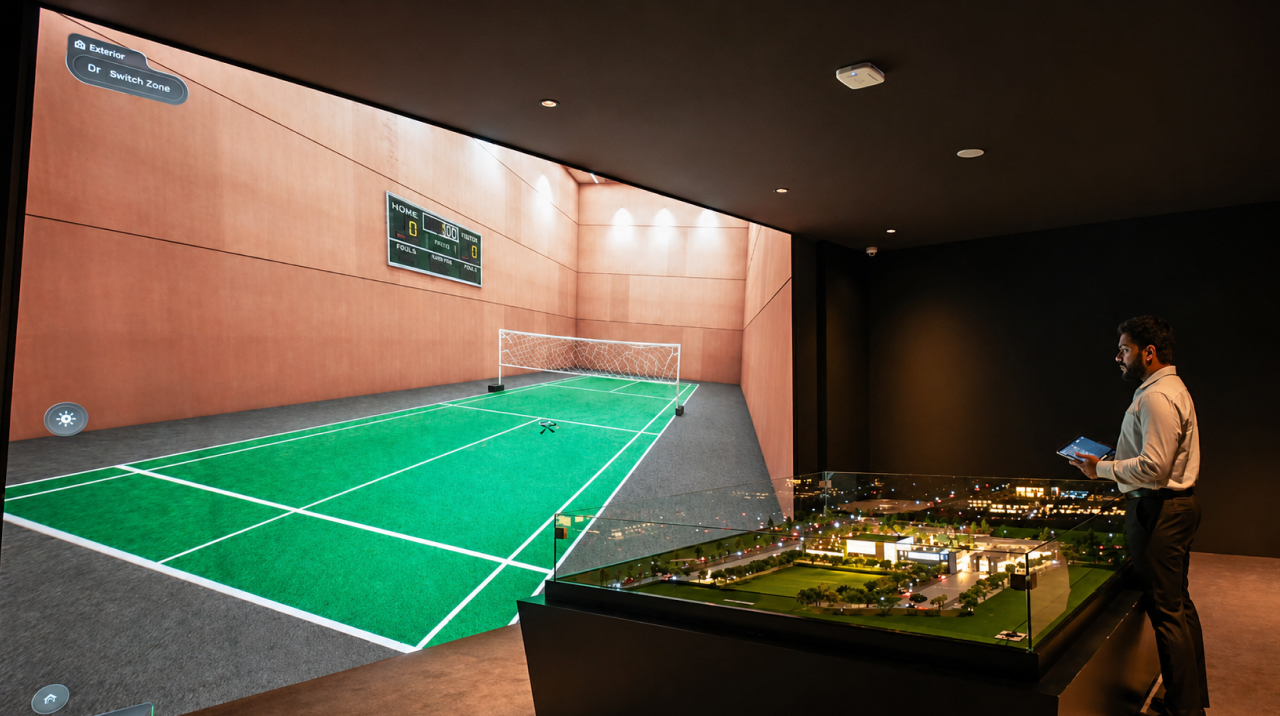
The Quality Shift That Immersive Property Walkthrough Technology Creates
Standard site visit bookings contain a significant proportion of tire-kickers — curious browsers, casual lookers, people with no genuine purchase intent who are simply gathering information. These bookings consume sales team time, inflate visit numbers, and generate no revenue. Immersive property walkthrough technology filters them out naturally.
A buyer who has invested 19 minutes exploring a property in immersive 3D is not casually curious. They have already visualized themselves living there. They have already answered most of their own questions. They are committed before they arrive — and the show-up data from Rustomjee proves it.
Before immersive property walkthrough technology, 340 monthly bookings translated to 265 actual site visits at a 78% show-up rate. After implementation, 1,240 monthly bookings translated to 1,215 actual site visits at a 98% show-up rate. That is the measurable difference between casual interest and genuine commitment — and it flows directly from what immersive property walkthrough technology does to buyer psychology before the booking even happens.
The Business Case for Immersive Property Walkthrough Technology in Plain Numbers
For developers and marketing heads evaluating this decision, Rustomjee's monthly economics tell the complete story.
Before immersive property walkthrough technology:
Website traffic: 5,400 monthly visitors
Site visit bookings: 340 at 6.3% conversion
Actual site visits: 265 after no-shows
Close rate: 9% — 24 units closed monthly
After immersive property walkthrough technology:
Website traffic: 5,400 monthly visitors — unchanged
Site visit bookings: 1,240 at 23% conversion
Actual site visits: 1,215 after no-shows
Close rate: 28% — 340 units closed monthly
That is 316 additional units closed every month. At an average unit price of ₹1.5 crore, that translates to over ₹474 crores in additional annual revenue. The investment in immersive property walkthrough technology was ₹11 lakhs. The payback period was 8.8 days.
This is not a marketing improvement. It is a fundamental revenue transformation driven by a single change in how buyers experience the project online.
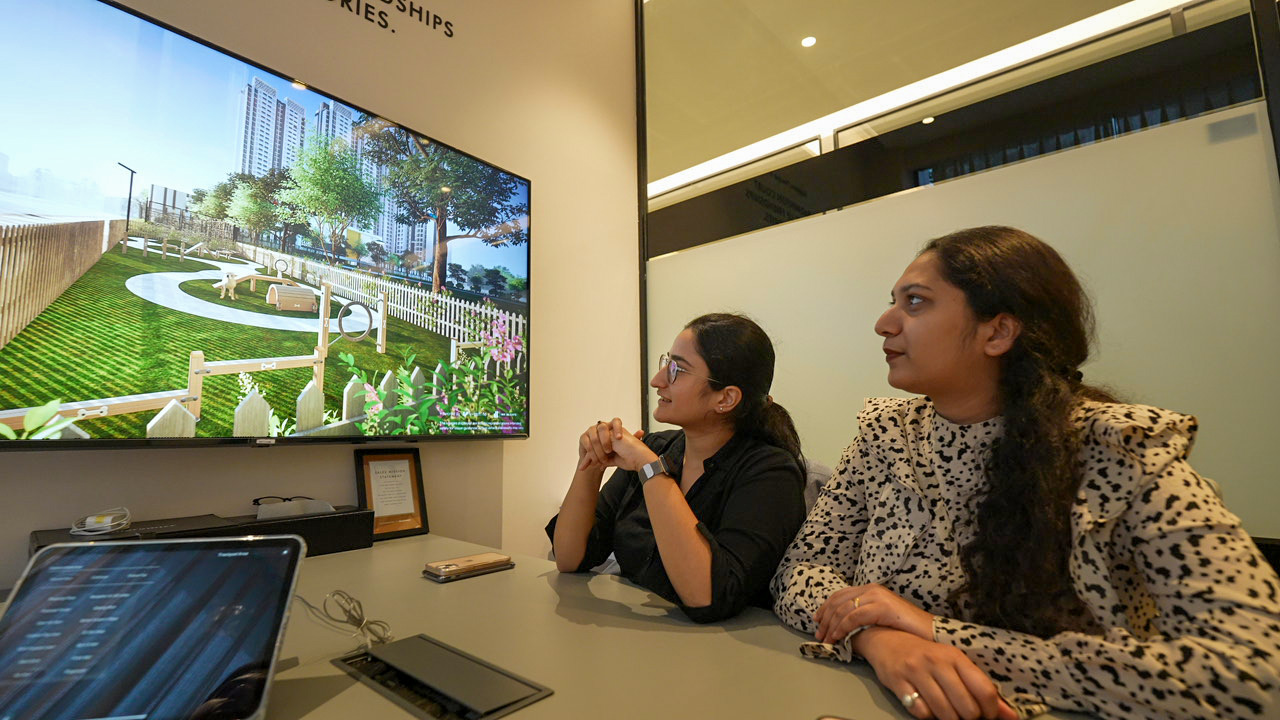
The Psychological Mechanics Behind Immersive Property Walkthrough Technology Booking Acceleration
Four converging factors explain why immersive property walkthrough technology triggers faster and higher quality bookings than any other marketing tool available to developers today.
Confidence acceleration happens first — buyers feel genuinely confident after an immersive walkthrough experience, and confidence is the direct precursor to booking commitment. Visualization completion follows — immersive property walkthrough technology answers the critical implicit question every buyer is asking: can I see myself here? Once that question is answered, the decision to visit becomes logical rather than uncertain. Information sufficiency closes the gap — buyers feel they have enough context to justify committing their time to a site visit, and that feeling of readiness is what triggers action. Finally, commitment signaling operates at a psychological level — a buyer who has just spent 19 minutes exploring a property has signaled to themselves that they are seriously considering it, and that internal signal makes the external action of booking feel like the natural next step rather than a leap.
The Competitive Advantage Window for Immersive Property Walkthrough Technology
Projects that implement immersive property walkthrough technology first in their market segment gain an advantage that is difficult for competitors to close quickly. Serious buyers — the ones most likely to convert — book first for projects that let them experience the space before committing to a visit. By the time competing projects implement the same technology, market perception has already shifted. First-mover advantage in immersive property walkthrough technology typically persists for 12 to 18 months, which in a competitive premium residential market can represent hundreds of crores in captured revenue that simply would not have existed otherwise.