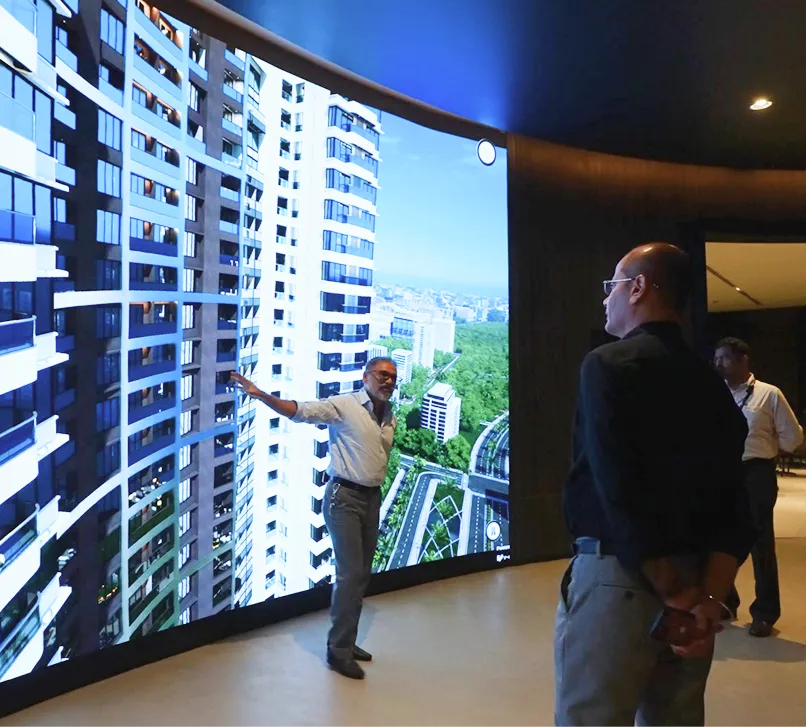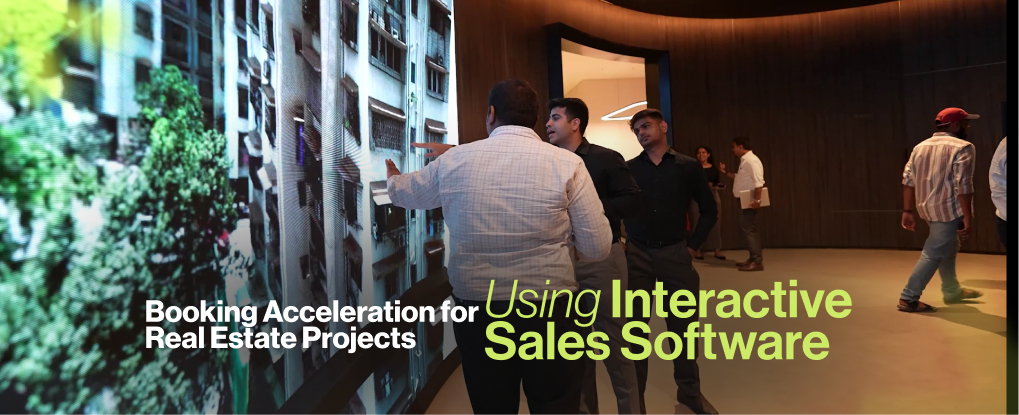
Sales cycles in real estate stretch unnecessarily when buyers cannot visualize what they are purchasing. Decision fatigue, incomplete information, and reliance on static brochures push qualified leads into extended evaluation periods. The result is slower bookings, higher drop-off rates, and unpredictable inventory movement.
Interactive sales software solves this problem by placing control in the buyer's hands during offline activations.
The Booking Velocity Problem in Real Estate Sales
Most developers face the same cycle. Prospects visit a sales office, review floor plans, and request repeat site visits. Each visit consumes time without guaranteeing commitment. The friction point is clarity—buyers struggle to imagine layouts, finishes, and actual views from their units.
Physical model flats address part of this gap. But they are expensive, limited in scope, and rarely reflect every configuration or customization option. Sales teams end up repeating the same walkthroughs, explaining the same details, and waiting for buyers to make decisions based on incomplete mental models.
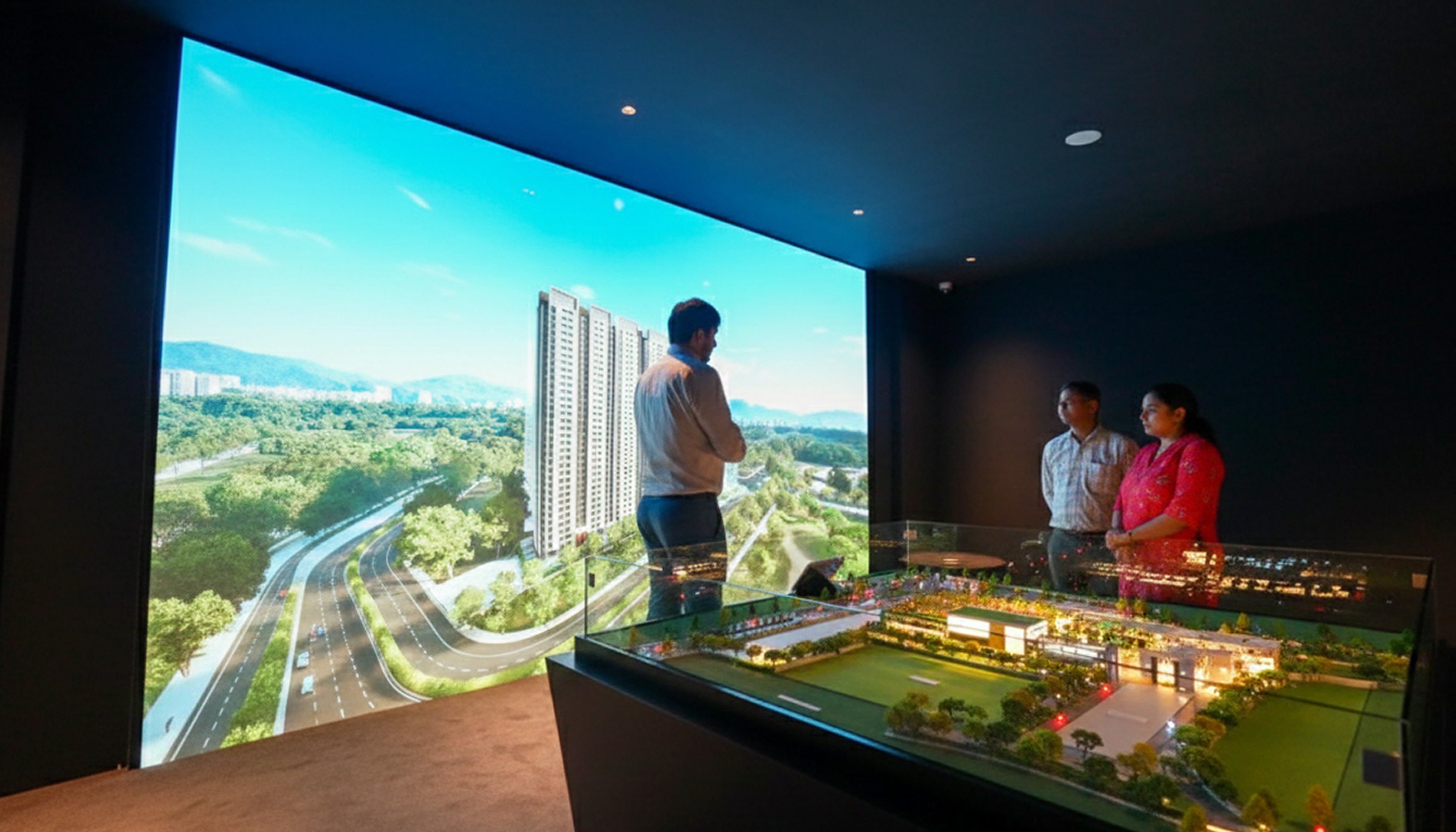
Offline sales activations at launches, pop-up centres, and roadshows amplify this challenge. Limited space, short interaction windows, and inconsistent presentations create uneven buyer experiences. Low-quality visuals and vague descriptions erode trust, extending sales cycles further.
The core issue is not lead volume. It is conversion efficiency at the point of decision.
What Interactive Sales Software Delivers
Interactive sales software replaces passive viewing with buyer-led exploration. Instead of listening to sales pitches, prospects control what they see, when they see it, and how they customize it. This shift reduces uncertainty and accelerates commitment.
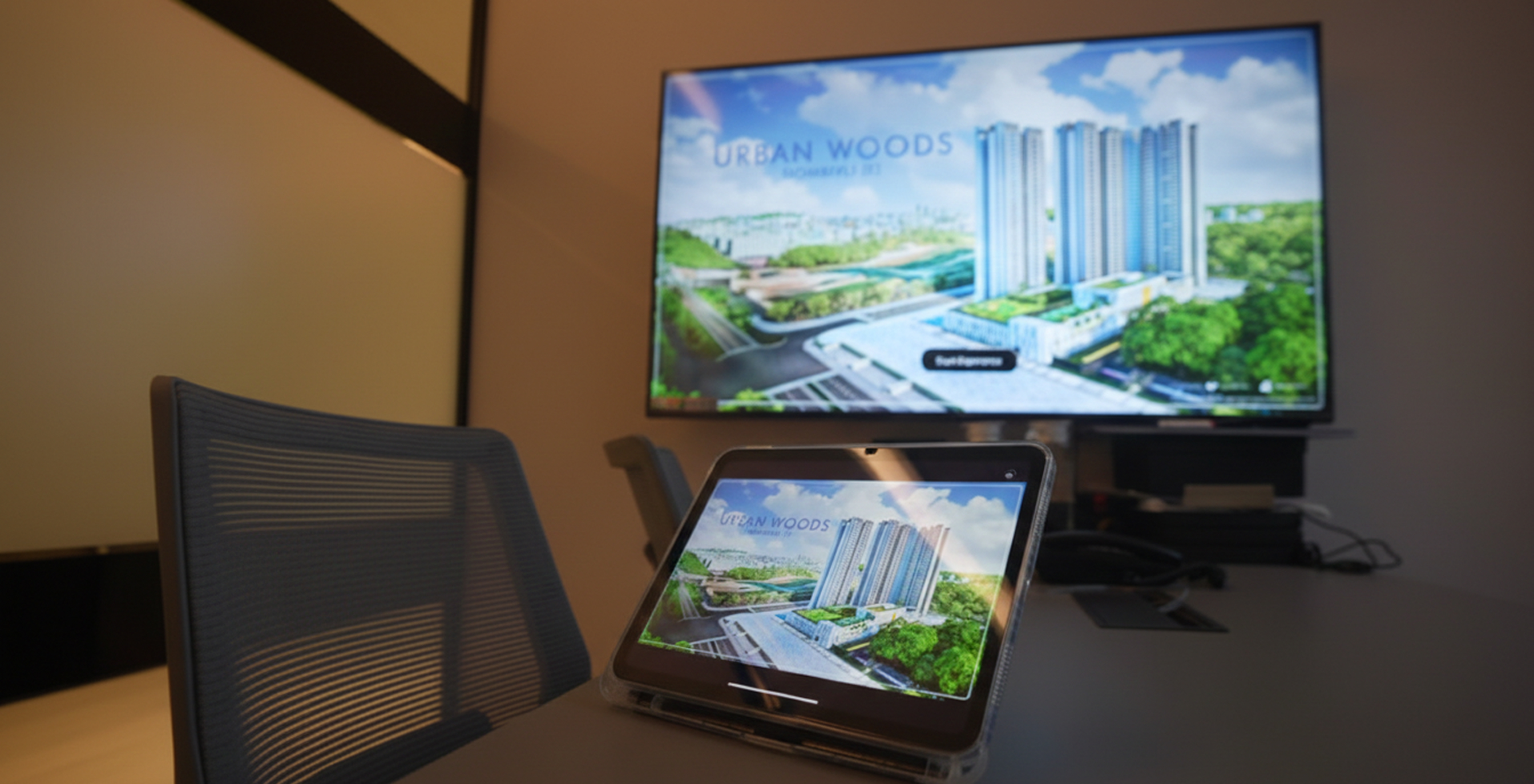
V-estate is built specifically for this purpose. It functions entirely offline, making it ideal for field activations, remote sales offices, and locations with unreliable internet connectivity. No buffering, no dependency on live connections, no disruptions during critical demos.
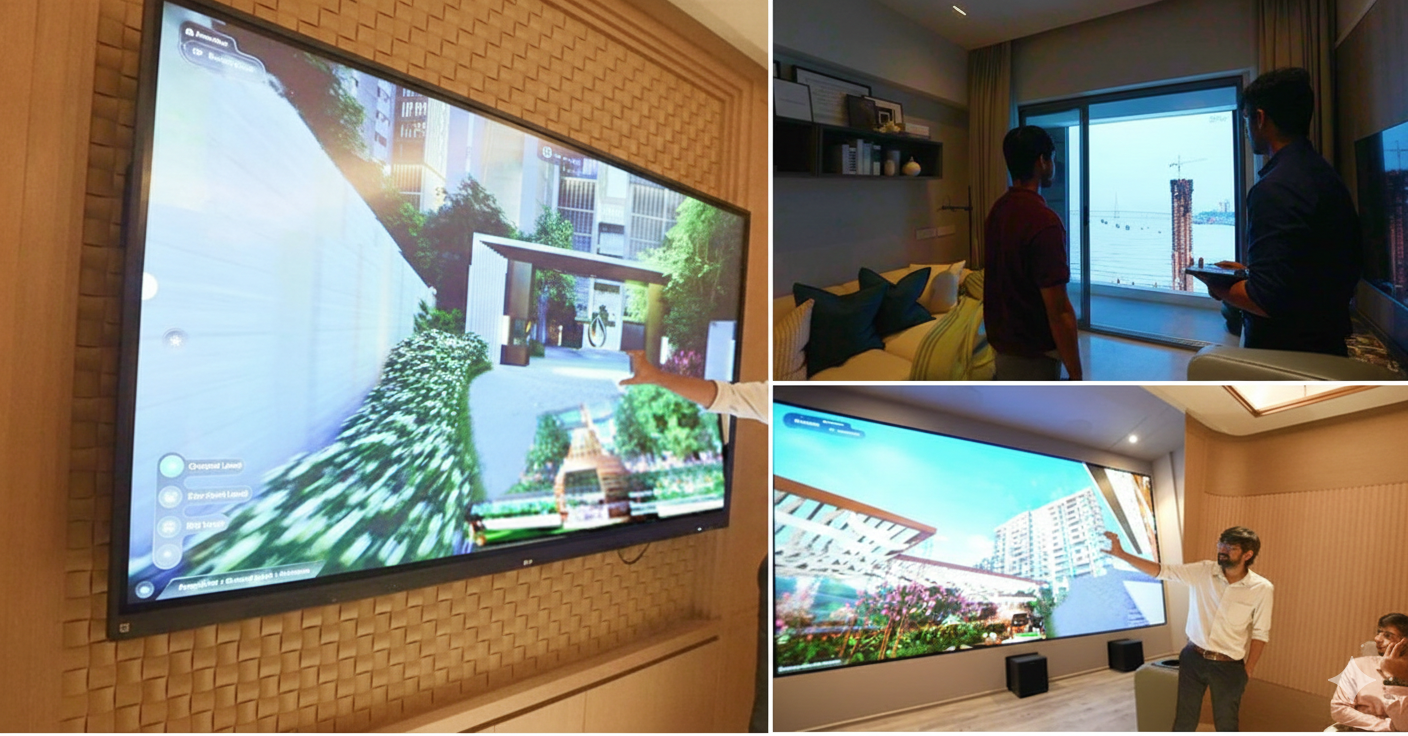
Buyers engage with photorealistic 3D show flats that replicate actual units down to finishes, furniture placement, and window views. They adjust lighting to see morning, afternoon, and evening conditions. They swap paint colors, furniture sets, and layouts in real time. Every interaction builds confidence and ownership.
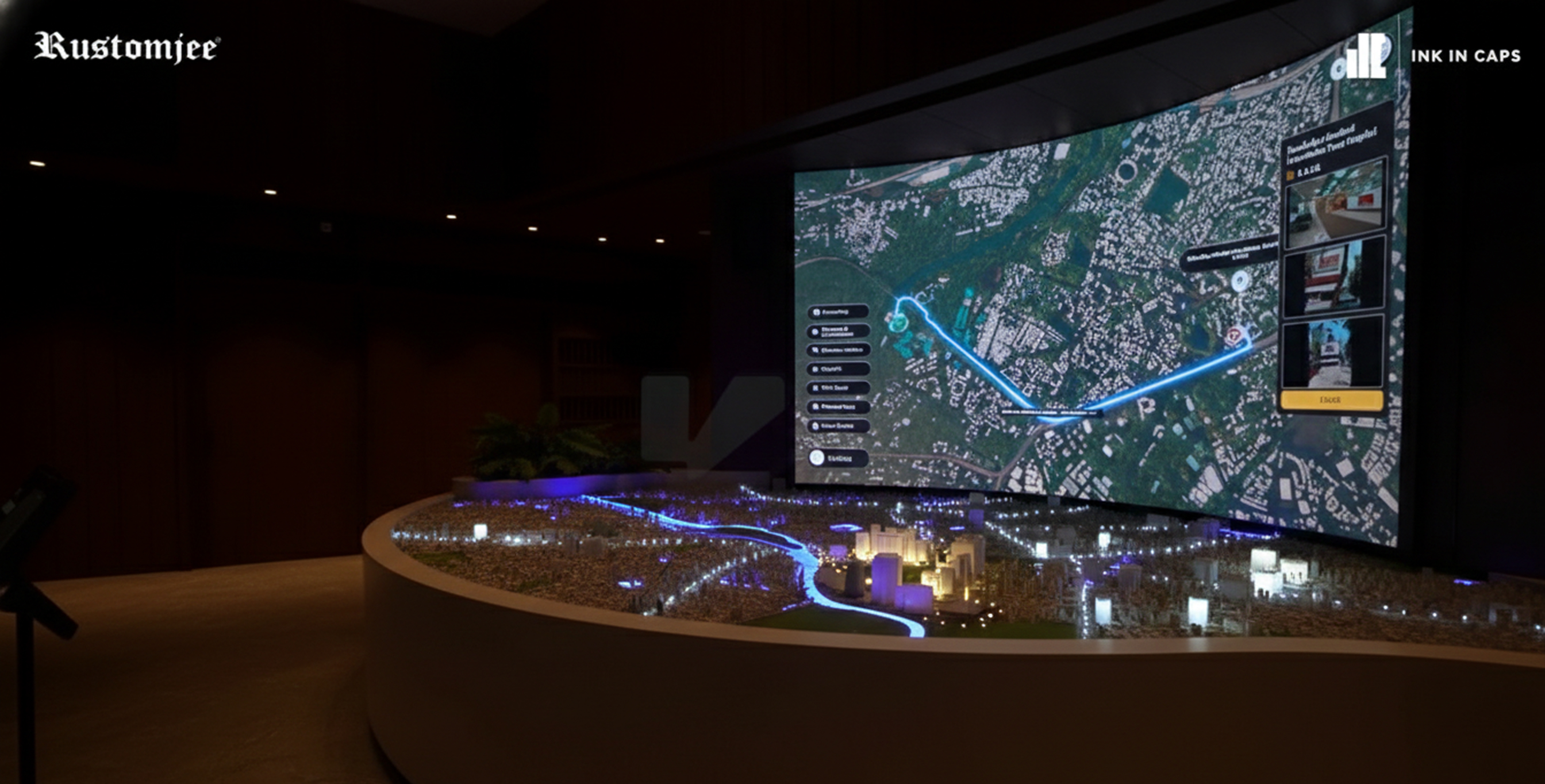
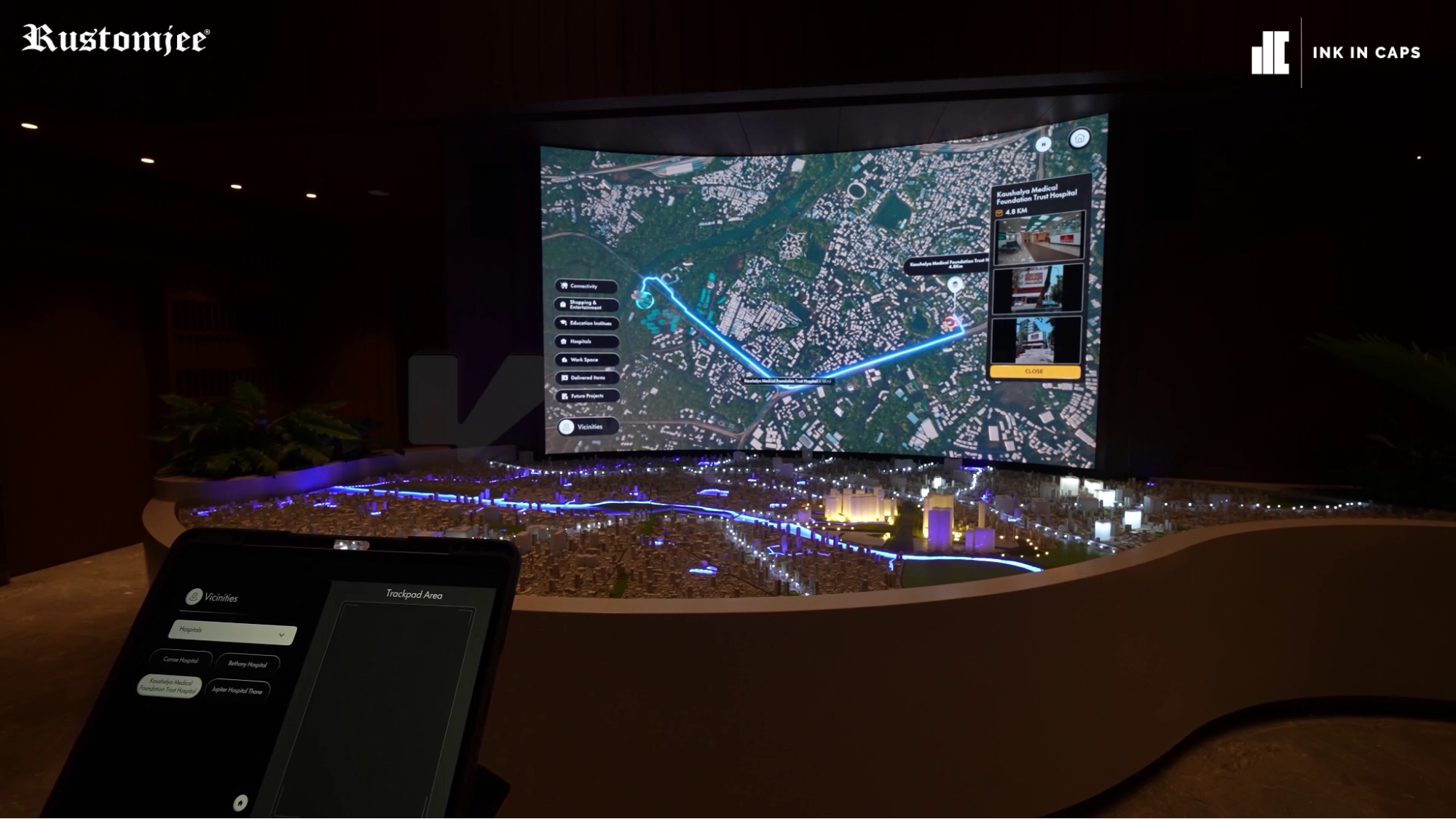
Amenity mapping overlays show current and upcoming facilities, connectivity options, and lifestyle infrastructure around the property. Buyers understand not just the unit, but the entire context of their future home.
This is not a marketing gimmick. It is a sales acceleration tool designed for measurable outcomes.
Core Features That Drive Faster Bookings
Photorealistic 3D show flats provide exact representations of unit configurations. Buyers see finishes, materials, and spatial relationships without relying on imagination. This removes the largest source of buyer hesitation.
Dynamic lighting and weather controls let prospects evaluate properties under different conditions. Morning light, evening ambiance, monsoon views—all adjustable within seconds. Buyers make informed decisions based on actual scenarios, not assumptions.
Real-time customization tools enable paint changes, furniture swaps, and layout adjustments on the spot. Buyers experiment with options, compare alternatives, and settle on preferences during the demo itself. Decisions happen faster when buyers see their choices reflected immediately.
Amenity and neighborhood mapping provides visual context beyond the unit. Buyers explore nearby schools, transit hubs, shopping districts, and upcoming infrastructure. This addresses location-related objections before they become deal-breakers.
Offline functionality ensures consistent performance regardless of venue or connectivity. Sales teams deliver the same high-quality experience at launches, roadshows, and remote offices. No technical dependencies, no failed demos, no lost momentum.
Analytics and lead capture track interaction patterns. Time spent on specific features, customization choices, and areas of focus reveal buyer intent. Sales teams prioritize follow-up based on engagement data, not guesswork.
Implementation for Marketing Heads and Sales Directors
Integrate V-estate into existing sales activation plans. Add interactive stations at launch events, sales offices, and high-footfall locations. Train field teams on structured demo flows that respect buyer time while maximizing engagement.
Design a 4–6 minute demonstration script. Short, focused demos increase throughput during peak periods and maintain buyer attention. Consistency in delivery improves conversion metrics across teams.
Set measurable KPIs before deployment. Track demo-to-booking ratios, time-to-decision, and follow-up conversion rates. Compare pre-implementation and post-implementation performance using matched control groups. Clean metrics reveal true ROI.
Use interaction data to score leads. High engagement signals serious intent. Immediate outreach to high-scoring prospects reduces response lag and captures interest while it is strongest.
Run controlled pilots at upcoming activations. Collect baseline data, measure uplift, and scale based on proven results. Iterative deployment reduces risk and builds internal buy-in.
Measurable Impact on Sales Velocity
Projects using immersive sales tools typically report higher onsite conversion rates and shorter booking timelines. Buyers who explore properties interactively make faster decisions because they have fewer unanswered questions.
Cost savings emerge from reduced dependency on multiple show flats and repeat site visits. Field teams operate more efficiently when buyers arrive at decisions during initial interactions.
Higher buyer satisfaction before handover reduces post-sale friction. When buyers visualize exactly what they are purchasing, expectations align with delivery.
Track these metrics rigorously. ROI calculation depends on accurate before-and-after comparisons, not anecdotal feedback.
Relevance to Decision-Makers
Marketing heads gain a repeatable, scalable activation asset that improves funnel efficiency. Sales directors reduce closing cycles and increase predictability. Project developers accelerate inventory movement and improve time-to-occupancy metrics.
V-estate does not replace sales teams. It enhances their effectiveness by removing information barriers and shortening the path from interest to commitment.
Next Steps for Faster Bookings
Evaluate V-estate at your next sales activation. Deploy controlled demos, capture interaction data, and measure conversion uplift against a baseline. Use those results to build a predictable booking acceleration program across future launches.
If your sales process still depends on static brochures and repeated physical walkthroughs, you are leaving velocity on the table. Interactive sales software cuts friction at the decision point and turns passive interest into informed commitment.