Luxury real estate today operates in a decision environment that is fundamentally more complex than it was a decade ago. Buyers are no longer evaluating just square footage or location; they are assessing long-term value, lifestyle alignment, architectural intent, and future appreciation potential. This layered decision-making naturally extends the sales cycle, especially in premium developments where ticket sizes are high and expectations are precise. The traditional reliance on brochures, static renders, and verbal explanations often fails to deliver the clarity required to accelerate such decisions.
At the same time, buyer behavior has undergone a measurable shift. Affluent buyers today are digitally conditioned, globally exposed, and increasingly remote. A significant portion of high-value real estate enquiries now originates from non-resident Indians and international investors who expect seamless, detailed, and interactive access to project information without physical site visits. This creates a critical gap between how projects are presented and how they are evaluated, directly impacting conversion timelines.
This is where architectural visualization software, particularly interactive platforms like Spaci by V-Estate, is redefining the sales process. By transforming static information into immersive, navigable experiences, these tools are not just enhancing presentation quality but actively reducing decision friction. The result is a measurable compression of sales cycles, driven by clarity, engagement, and confidence.
The Traditional Sales Cycle Problem in Luxury Real Estate
Luxury real estate sales cycles have historically been prolonged due to structural inefficiencies in how information is communicated and consumed.
Fragmented information delivery Buyers are required to piece together multiple formats such as brochures, floor plans, physical models, and verbal explanations. This fragmented approach increases cognitive load and slows down decision-making, particularly when evaluating complex projects with multiple configurations.
Limited visualization of intangible value Key differentiators such as view corridors, light flow, spatial proportions, and lifestyle integration are difficult to communicate through static mediums. This often leads to hesitation, repeated site visits, and prolonged deliberation.
Dependence on sales personnel' interpretation The quality of a presentation varies significantly based on the salesperson’s ability to articulate the project. This introduces inconsistency and reduces the reliability of the sales experience.
Inability to scale remote engagement effectively For international or outstation buyers, the absence of a physically immersive experience delays decision timelines and increases dependency on follow-ups.
These challenges collectively extend the sales cycle, increasing the cost of acquisition and reducing conversion efficiency.
Rise of Archviz Software in Real Estate Sales Strategy
Architectural visualization software has evolved from being a marketing enhancement to becoming a core sales infrastructure.
1. From Static Renders to Interactive Decision Systems
Modern platforms like Spaci enable real-time interaction with the project, allowing buyers to:
Navigate through spaces
Switch between units and configurations
Understand spatial relationships dynamically
This reduces ambiguity and replaces passive viewing with active exploration.
2. Visualization as a Cognitive Shortcut
When buyers can see and experience the product with precision, the need for imagination is eliminated. This directly reduces the following:
Clarification loops
Repeated consultations
Time spent in evaluation
3. Standardization of Sales Experience
Interactive platforms ensure that every buyer receives a consistent, high-quality presentation regardless of the sales representative. This standardisation improves trust and accelerates decision-making.
How Spaci by V-Estate Enables Faster Conversions
Spaci is not just a visualization tool; it is an integrated sales acceleration platform designed to compress decision timelines through structured interactivity.
Integrated Modules That Mirror Buyer Decision Flow
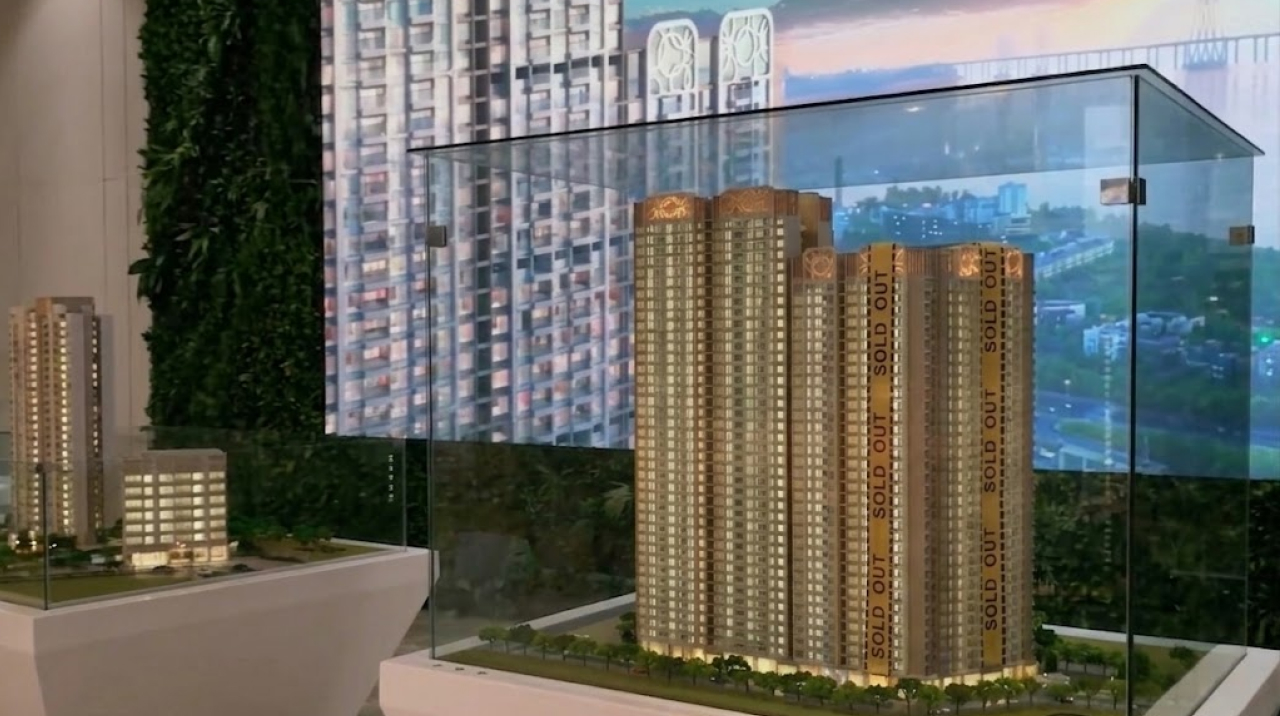
Exterior Visualization with contextual depth High-fidelity 3D representations showcase architectural design along with environmental context such as skyline, water bodies, and surrounding landscape. Buyers can evaluate the project not just as a structure but as a living environment, reducing uncertainty about external factors.
Amenities Mapping with experiential clarity Instead of listing amenities, Spaci allows users to explore each facility interactively. This transforms amenities from a checklist into a tangible lifestyle proposition, making it easier for buyers to justify premium pricing.
Vicinity Intelligence Layer Location is a primary driver of luxury real estate decisions. Spaci integrates surrounding infrastructure, landmarks, and future developments into an interactive layer, enabling buyers to assess connectivity and long-term value without external research.
Interior Unit Exploration with real-view simulation Buyers can virtually step into apartments, understand layouts, and, most importantly, experience actual views from windows. This is critical in premium projects where views are a key differentiator and often a decisive factor.
Technology That Enhances Engagement and Reduces Friction
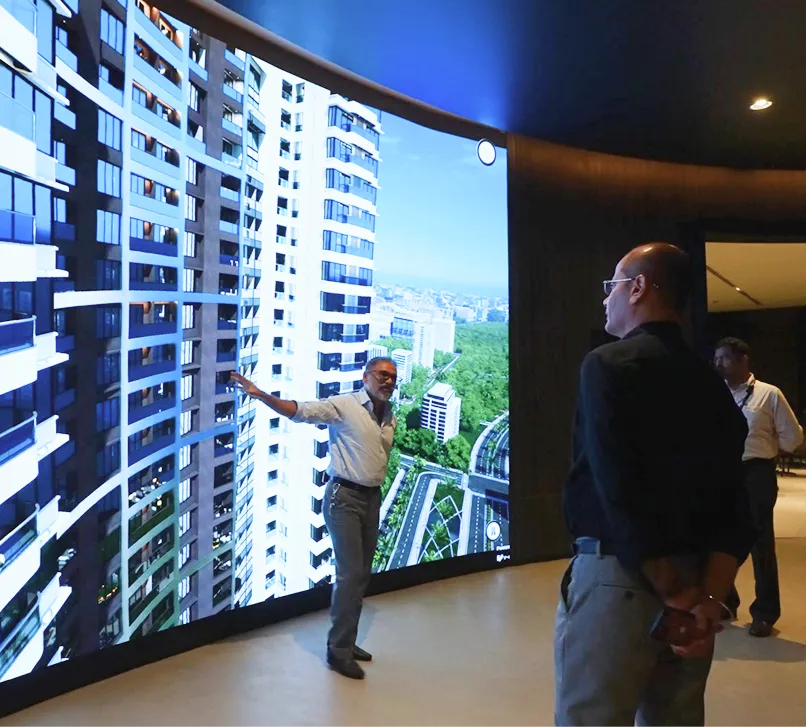
Touchscreen-enabled large displays High-resolution screens create an immersive visual impact, ensuring that buyers are immediately engaged from the moment they enter the sales gallery.
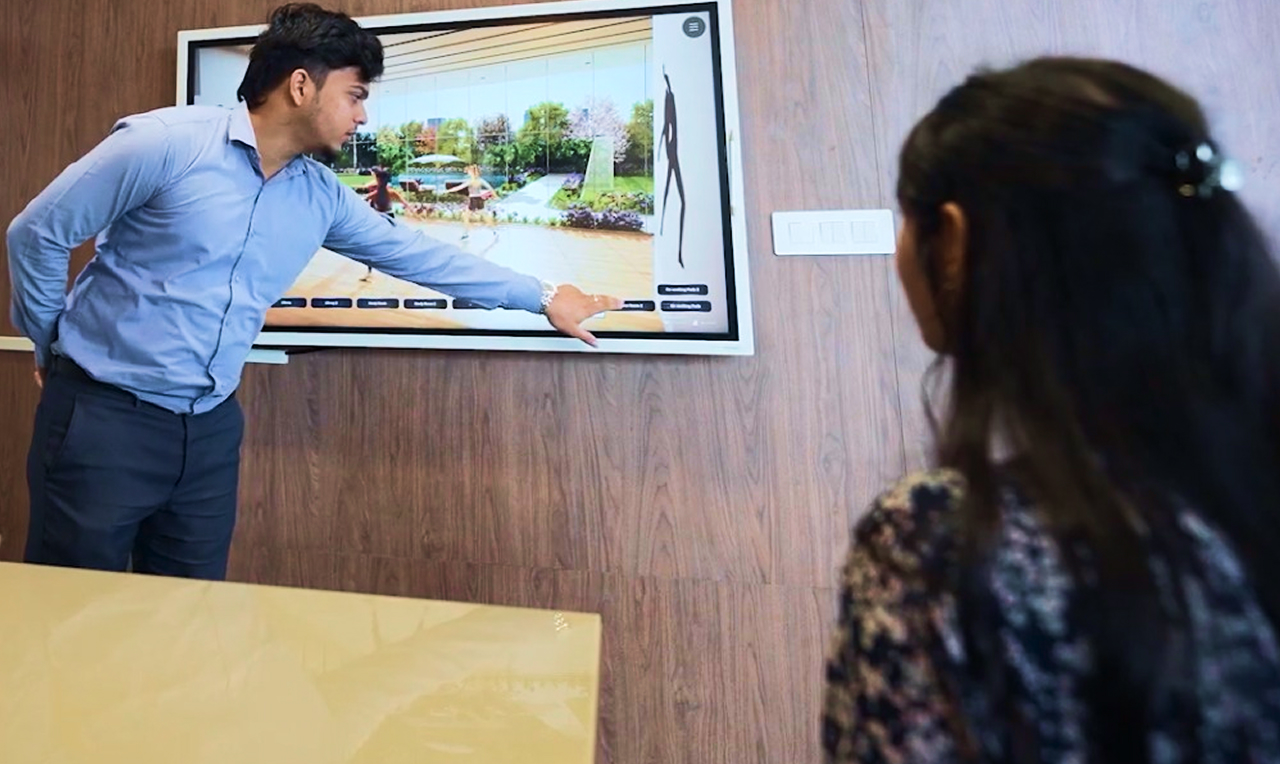
iPad-controlled navigation for sales teams Sales representatives can seamlessly guide the experience, switching between modules without disrupting the conversation flow. This keeps the interaction structured and efficient.
Integrated display ecosystems within the gallery From waiting area screens to detailed walkthrough zones, the entire environment is designed to maintain engagement continuity.
Web-based platform for remote access The same experience is extended digitally, allowing international buyers to explore the project independently or through guided sessions. This significantly reduces dependency on physical visits.
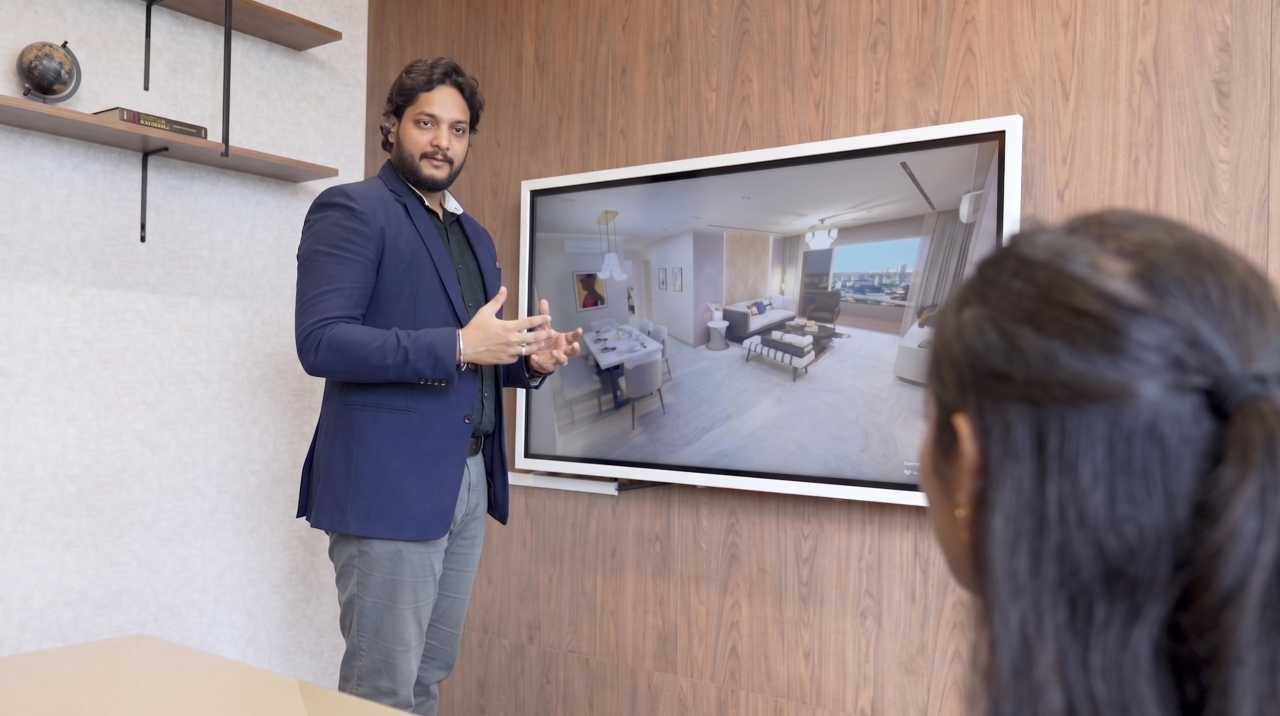
Case Study: L&T Realty Island Cove, Mahim
L&T Realty, established in 2011, is known for delivering high-quality residential and commercial developments with a strong focus on design innovation. Island Cove in Mahim was positioned as a premium offering with a unique advantage: unobstructed views of the Bandra Worli Sea Link and surrounding mangroves.
Objective
The challenge was to translate this value proposition into a format that could:
Clearly communicate the project’s location advantage
Showcase lifestyle and architectural intent
Enable remote engagement for international buyers
Solution Deployment Using V-Estate’s Interactive Software
The solution was built as a multi-module interactive experience aligned with buyer decision priorities.
Exterior Module
High-quality 3D visualizations captured the architectural design across different times of day
View simulations highlighted the Bandra-Worli Sea Link and natural surroundings, allowing buyers to understand the premium positioning instantly
Amenities Module
Each amenity was mapped and visualized interactively
Buyers could explore facilities in detail, enabling a clearer understanding of lifestyle benefits and community planning
Vicinity Module
Surrounding infrastructure, connectivity routes, and landmarks were integrated into an interactive layer
Future developments were also included, reinforcing the project’s long-term investment value
Interior Unit Module
Detailed representations of sample apartments allowed buyers to experience layouts virtually
Special emphasis was placed on window views, showcasing sea-facing and mangrove-facing perspectives which were key selling drivers
Tech Infrastructure Driving the Experience
55 inch touchscreen displays enabled intuitive navigation and high-impact visualization within the sales gallery
iPad-based control systems allowed sales teams to manage the experience seamlessly, ensuring structured presentations
Integrated LED displays in waiting areas initiated engagement even before formal discussions began
Web-based replication of the platform extended the experience globally, enabling remote walkthroughs without loss of detail
Results: Measurable Impact on Sales Cycle
Higher engagement per session Buyers spent more time interacting with the platform, leading to deeper understanding in a single visit rather than multiple follow-ups.
Improved clarity in decision-making With all critical information accessible in one interface, the need for repeated explanations and site visits reduced significantly
Expanded international reach The web platform enabled seamless engagement with overseas buyers, accelerating conversions that would otherwise take longer due to logistical constraints
Standardization across sales interactions Every prospect experienced the project in a consistent, structured manner, reducing variability in sales effectiveness
Strategic adoption across future projects Due to its success, the platform has been mandated for all future launches by the developer, indicating strong ROI and operational impact
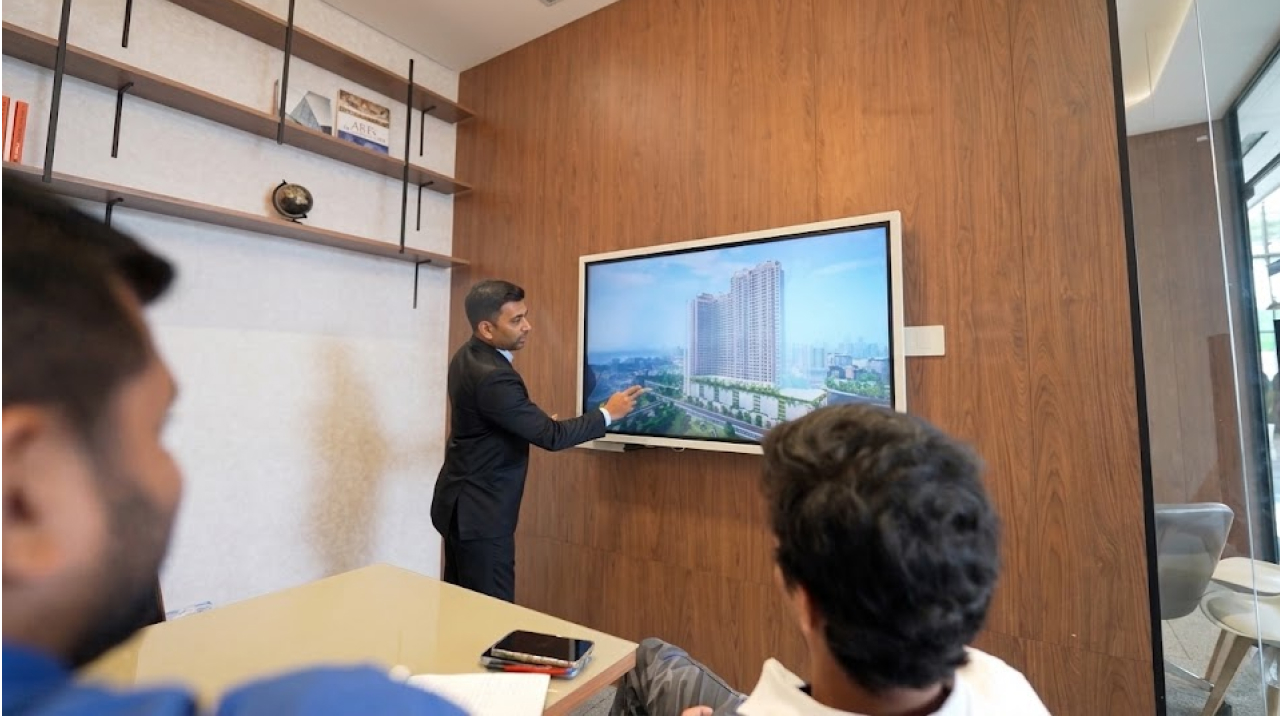
Key Ways Archviz Software Shortens Sales Cycles
1. Eliminates Ambiguity in High-Value Decisions
Buyers are able to visualise every aspect of the project with precision, reducing hesitation and the need for additional validation.
2. Reduces Dependence on Physical Visits
With immersive digital experiences, buyers can evaluate projects remotely, accelerating decision timelines, especially for international clients.
3. Compresses Information into a Single Interface
Instead of multiple touchpoints, all relevant data is accessible within one structured platform, reducing friction in the evaluation process.
4. Enhances Sales Team Efficiency
Sales representatives spend less time explaining basics and more time addressing specific buyer concerns, improving conversion quality.
5. Builds Buyer Confidence Through Transparency
Clear visualization of views, layouts, and surroundings eliminates perceived risk, which is a major factor in delayed decisions.
Conclusion
Luxury real estate sales are no longer limited by inventory or demand; they are constrained by how effectively value is communicated. As projects become more complex and buyers more discerning, the ability to deliver clarity at speed becomes a decisive competitive advantage.
Archviz software, particularly interactive platforms like Spaci by V-Estate, is redefining this dynamic. By aligning visualization with buyer cognition and sales strategy, it transforms the sales process from a prolonged negotiation into a structured, insight-driven journey.
For developers looking to reduce sales cycles without compromising on buyer experience, the focus must shift from presentation to interaction. Platforms like Spaci are not just tools; they are infrastructure that enable faster, more confident decisions at scale.
If your project demands faster conversions, stronger buyer conviction, and a more controlled sales narrative, it is time to experience this shift firsthand — book a demo with V-Estate and evaluate how interactive visualization can directly impact your sales velocity.