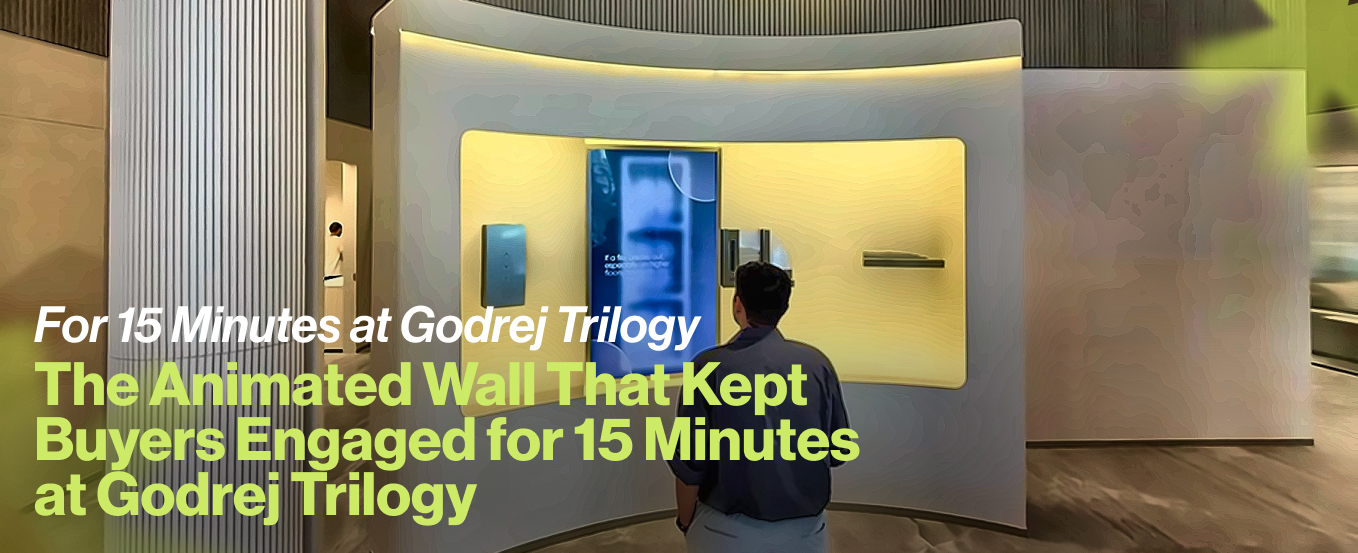
Most luxury showrooms look expensive. Few actually communicate value.
A premium lobby, a scale model, a brochure with aerial renders — buyers have seen it all. They sit through presentations. They nod. Then they leave to "think about it."
That hesitation has a cost. And it rarely has anything to do with the price.
The Real Bottleneck in Luxury Real Estate Sales
Buyers at the ₹5–25 crore ticket size are not impulsive. They are evaluating risk. They want to know:
What is this building actually made of?
How safe is it, structurally and operationally?
What separates this from the project across the road?
Sales teams struggle to answer these questions convincingly — not because the product lacks quality, but because the tools are wrong. A PDF spec sheet does not build conviction. Neither does a five-minute MP4 walkthrough playing on a screen in the corner.
The gap is not in the product. The gap is in how the product is communicated.
What Godrej Trilogy Did Differently at Worli
The Godrej Trilogy experience centre at Worli was built around one clear objective: make invisible engineering visible.
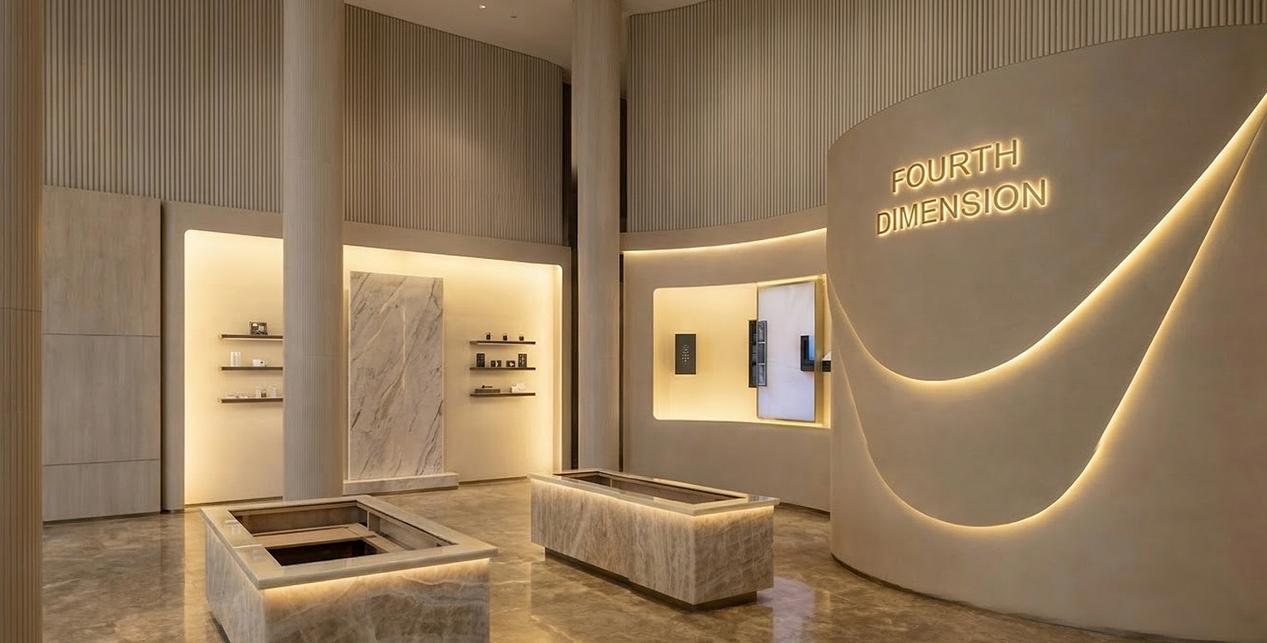
The layout itself was intentional — an S-shaped spatial flow guiding buyers through two sequential zones. No abrupt transitions. No information overload. A controlled, paced walkthrough designed to build trust before price conversations begin.
Two installations anchored the entire experience:
Zone 1 — The Curved Rotoscopic Wall
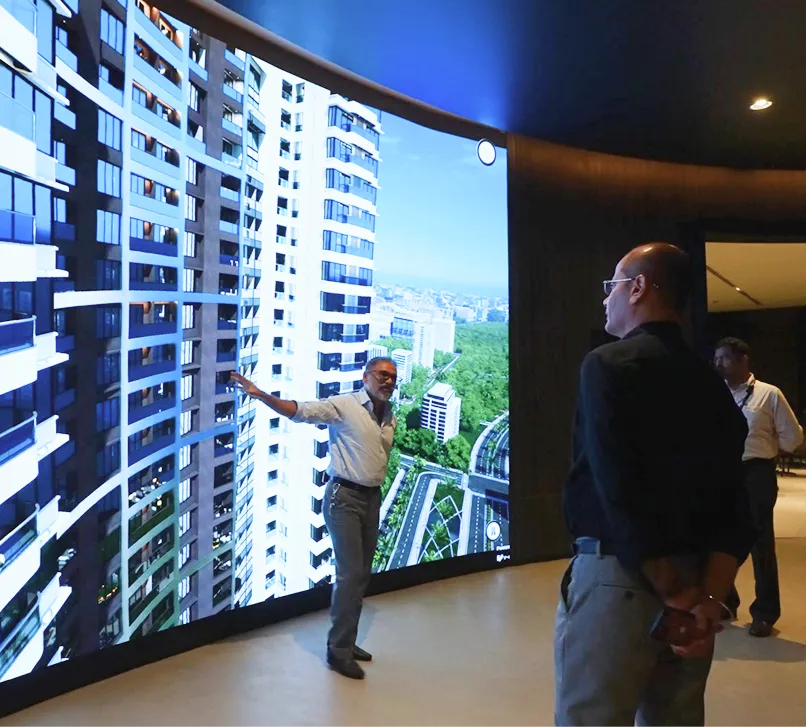
A 10-foot-high curved rotoscopic wall at the first bend. Motion-sensor triggered. No buttons. No remote.
As buyers approached, kinetic animations activated — converting construction data into visual sequences. No narration required. The wall spoke through movement.
Engineering topics covered:
Dual-layer waterproofing with reinforced RCC seepage prevention
High-speed elevator systems optimised for luxury high-rise wait times
Fire-rated shafts and FRLS wiring for structural fire safety
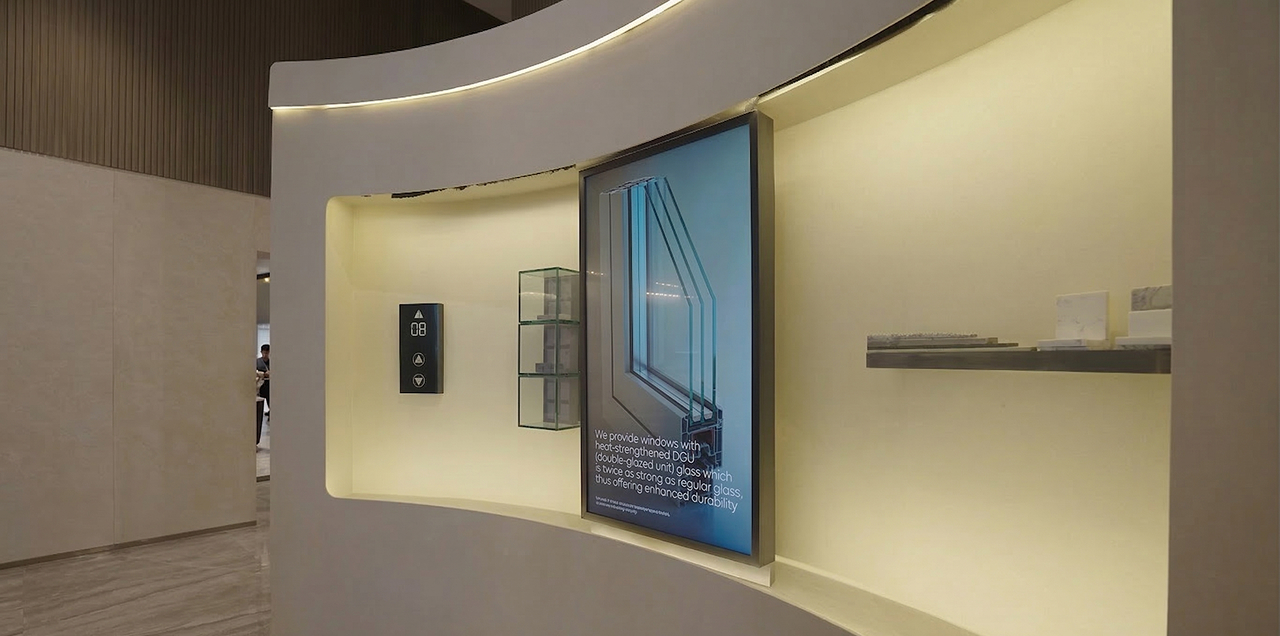
Double-glazed coastal windows with wind resistance and acoustic insulation
Average engagement: 15 minutes per visitor.
That is not a typo. Buyers stood, watched, pointed, and asked questions — in front of a wall. Because for the first time, they were seeing the inside of what they were buying.
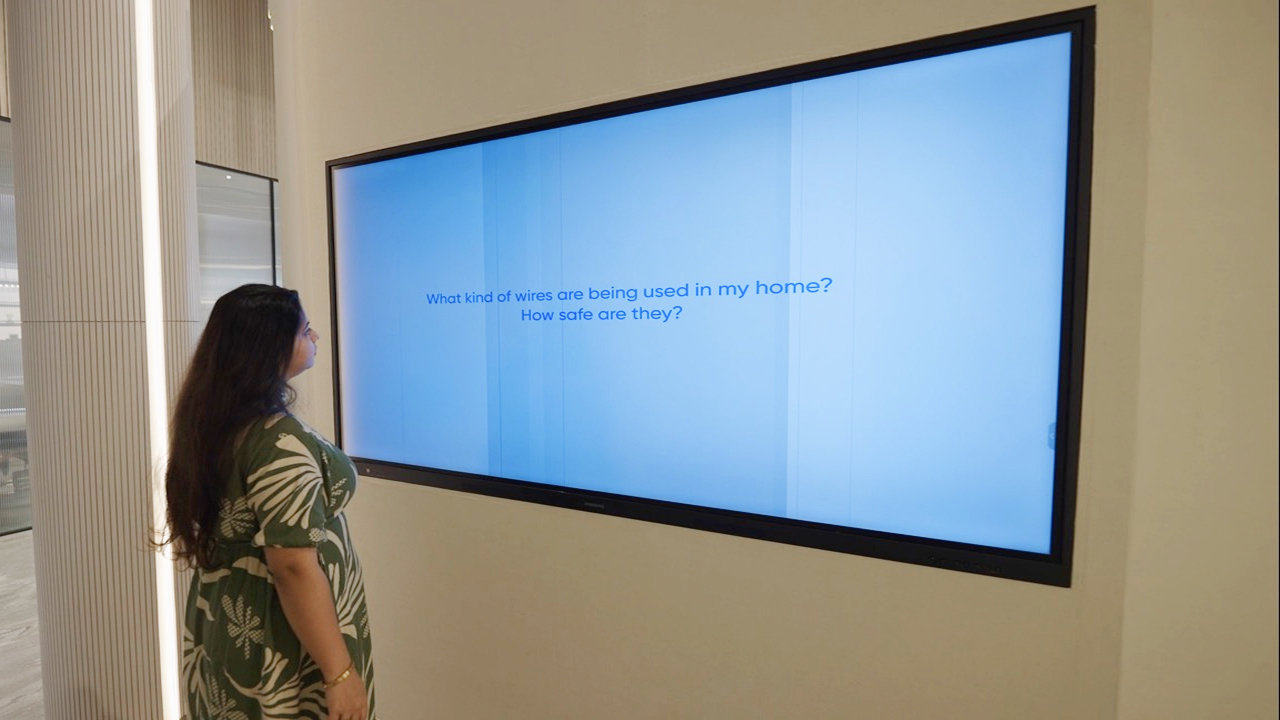
Zone 2 — The 86-Inch Interactive Touchscreen Wall
After the rotoscopic walkthrough, buyers moved to a large-format interactive screen. Sales executives guided them through 30–50 second animated explainers — each covering a specific build assurance topic.
Topics included:
Anti-capillary waterproofing treatments for seepage prevention
Earthquake-compliant structural reinforcement and load distribution
CPVC plumbing systems designed for long-term leak resistance
PU foam crack-prevention technology at structural stress points
Wind-tunnel validation by international structural consultants
Average interaction time: 5 minutes per module.
The content was modular — updateable without hardware replacement. New engineering milestones, new materials, new safety certifications could be added as the project progressed.
The Sales Journey Was Restructured, Not Just Decorated
This was not an aesthetic upgrade. The entire buyer conversation was resequenced.
Old flow: Enter → See renders → Hear pricing → Maybe ask questions → Leave
New flow: Enter → Understand engineering → Build conviction → Ask informed questions → Discuss pricing
Buyers arrived at the pricing table already convinced of product quality. The sales executive's role shifted from persuader to expert guide. Conversations became more technical, more substantive, and more productive.
Sales teams were trained on experiential storytelling — not scripts. The structure gave them a framework, and the tools gave them proof points.
What This Means for Developers Planning Luxury Launches
If your experience centre is still built around a theatre room and a scale model, you are having the wrong conversation with your buyers.
High-intent buyers in the luxury segment respond to transparency, not theatre. They want to understand what they are paying for. When you show them the engineering, not just the elevation, conviction follows.
Key outcomes at Godrej Trilogy:
Average buyer engagement time increased to ~20 minutes per visit
Buyers initiated technical questions independently — a measurable indicator of conviction
Sales executives used the installations as primary presentation tools, not supplements
The format was built for repeatability — consistent experience across every visitor, every day
The Practical Takeaway
Experience centres need to earn their square footage. A passive AV room does not close a ₹10 crore sale. An environment that systematically builds product trust does.
The Curved Rotoscopic Wall and Interactive Touchscreen Wall at Godrej Trilogy were not novelties. They were sales infrastructure — designed to solve a specific communication problem in luxury real estate.
If your sales team is spending the first 30 minutes of every visit explaining why your building is better than the competition, the experience centre is not doing its job.
The wall should do that work. Your team should close.