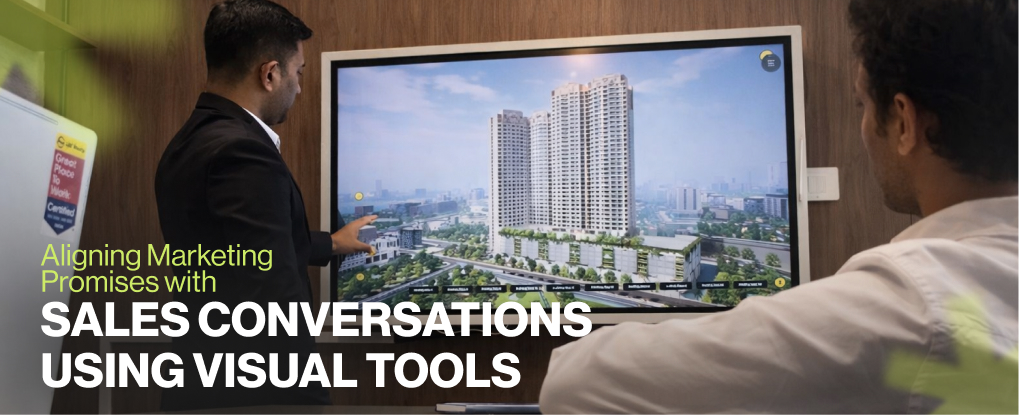
When it comes to real estate, buyer expectations have significantly increased and are no longer what they were a few years ago. Previously, brokers or channel partners would hand out brochures to the buyers, take them on site visits, have a sales team ready to solve their doubts, and close the deal. But with the advancements in technology today, it is possible to sell a home even when it isn't physically built yet. However, that also means buyers need a lot more convincing before they make up their minds about finalizing a house. This is why more and more real estate agents are understanding the importance of visual assets and how they help in creating a more connected sales ecosystem.
What are Visual Assets in Real Estate Marketing?
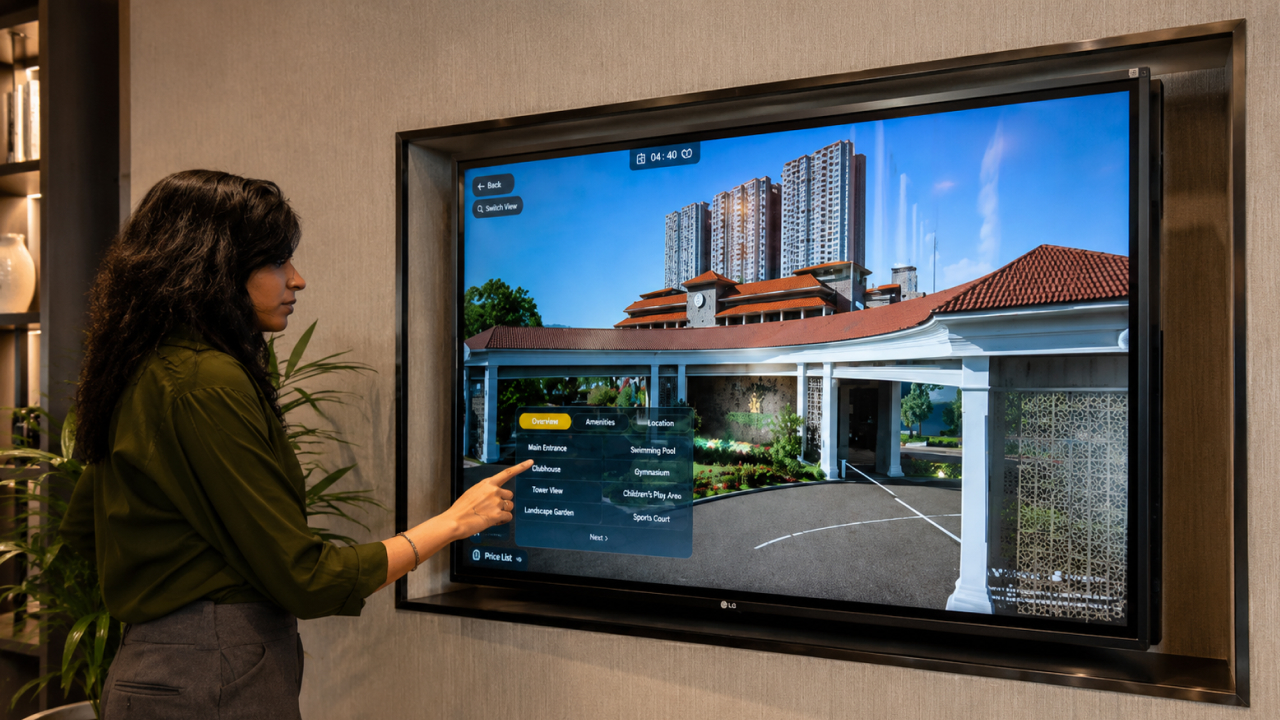
Visual assets are any tools that property marketers use that help buyers visualize what the real estate project should look like when it is ready. It typically consists of digital twins, virtual tours, architectural visualizations, 3D building models, interactive floor plans, amenity visualizations, location & vicinity maps, window view simulations, and virtual show flats.
These are useful because they enhance the way a buyer can visually explore a property. For example, when a real estate agent uses a video tour to showcase a property, it is an informative experience; however, it lacks immersion. When a buyer is shown the same property but this time using sales tools that allow for a virtual tour, they can find the same information, but this time the chances of them understanding the different property features increase exponentially. This is because, since the experience is immersive and engaging, the user learns about these featu
res by actively interacting with them and not just reading about them.
How Real Estate Agents Use Visual Assets as a Marketing Funnel

According to the definition of a marketing funnel, it is a purchase cycle that a buyer goes through before becoming a customer. It typically involves 4 main stages: Awareness, Consideration, Conversion, and Loyalty. Thus, visual assets like Digital Twins qualify as a marketing funnel because they allow real estate agents to easily take buyers through all 4 of these phases, often using just one sales tool. Here is how these assets help out in the different stages of the sales cycle:
Awareness
In a marketing funnel, awareness is the first step of the sales cycle, and it requires the salesperson to attract the buyer. When it comes to real estate, traditionally brochures are used for this step, which is still a viable option. However, virtual assets like a web-based AR experience can be used to give them an interactive experience that raises their curiosity. This accomplishes the awareness step as the buyer is now attracted to the property and aware of not only the project but also the developer.
Consideration
Visual assets get to truly shine here as they offer a wide variety of options to the developers to help property marketers visualize their project better. For example, virtual tours help buyers digitally step into their home and completely explore it in a similar fashion to as if they were checking out the house physically. Window view simulation is another visual asset that helps the sales team visualize better. With it, buyers get to simulate the view outside their balcony or view during different weather conditions or times of the day. All of these solutions make it not only easier but gives buyers multiple reasons to not just consider but also go ahead with the purchase.
Conversion
When it comes to converting a lead, property marketers need to timely followup the interested clients. However, that is just one part of the equation. Real estate agents also need to make sure that they readily have access to the latest, updated, and most relevant information. A sales journey often requires a lot of back and forth between different kinds of documents, messages, emails, and more. It is essential that the sales team have access to software that helps them with it. A virtual asset can help with that, as the sales team can make use of sales tools with integrated CRM systems to make the process easier. This ensures that no potential leads get missed while increasing the conversion rate.
Loyalty
Since real estate is an expensive investment, customer loyalty through a marketing funnel can be measured using advocacy. When a developer provides an immersive and unforgettable experience, the buyer is incentivized to check out the property for themselves. And when they like it, they are more likely to buy it if it matches their preferences. However, despite them actually buying the house, it is unlikely that they will buy multiple properties from the developer considering the nature of the purchase. But if they recommend the developer or the project to other people, that qualifies as loyalty. They are happy with their home and are confident that their peers would have a similar experience.
To sum it up, visual assets are the future of real estate marketing. Sales teams can use these tools to offer solutions like digital twins to support the marketing funnel. They help create awareness about the project for the buyers, get them interested in considering a property tour, give the sales teams the tools to convert interested clients, and in general deliver an experience that leads to buyer loyalty. However, it is important that developers and sales teams use the right visual assets that meet their project's needs. This is where V-Estate comes in; we offer clients Spaci, a custom visual asset that helps you showcase your property better to the client. Contact us now to book a demo, and our team of experts will reach out to you, and together we can come up with a solution that not only boosts your sales but also gives your buyers an unforgettable experience!
.jpg)
%20(1).jpg)