.jpg)
The debate between physical sample flats and virtual visualization tools has divided real estate marketing teams for years. Most developers pick one approach and defend it religiously. Nahar Realty's Chandivali Valley project suggests there's a smarter play: using both, but understanding exactly what each tool does best.
This isn't about technology replacing brick and mortar. It's about designing a sales process where digital visualization and physical experience work together to solve different problems at different stages of the customer journey.
The Real Cost of Sample Flat Dependencies
Sample flats have been the industry standard for decades. They work. But they come with limitations that marketing heads know intimately:
Physical sample flats lock you into showing one configuration. A 3BHK with a specific layout, fixed finishes, and predetermined furniture. When a prospect asks about different flooring or wants to see how their existing furniture fits, the conversation becomes abstract again. You're back to asking them to imagine.
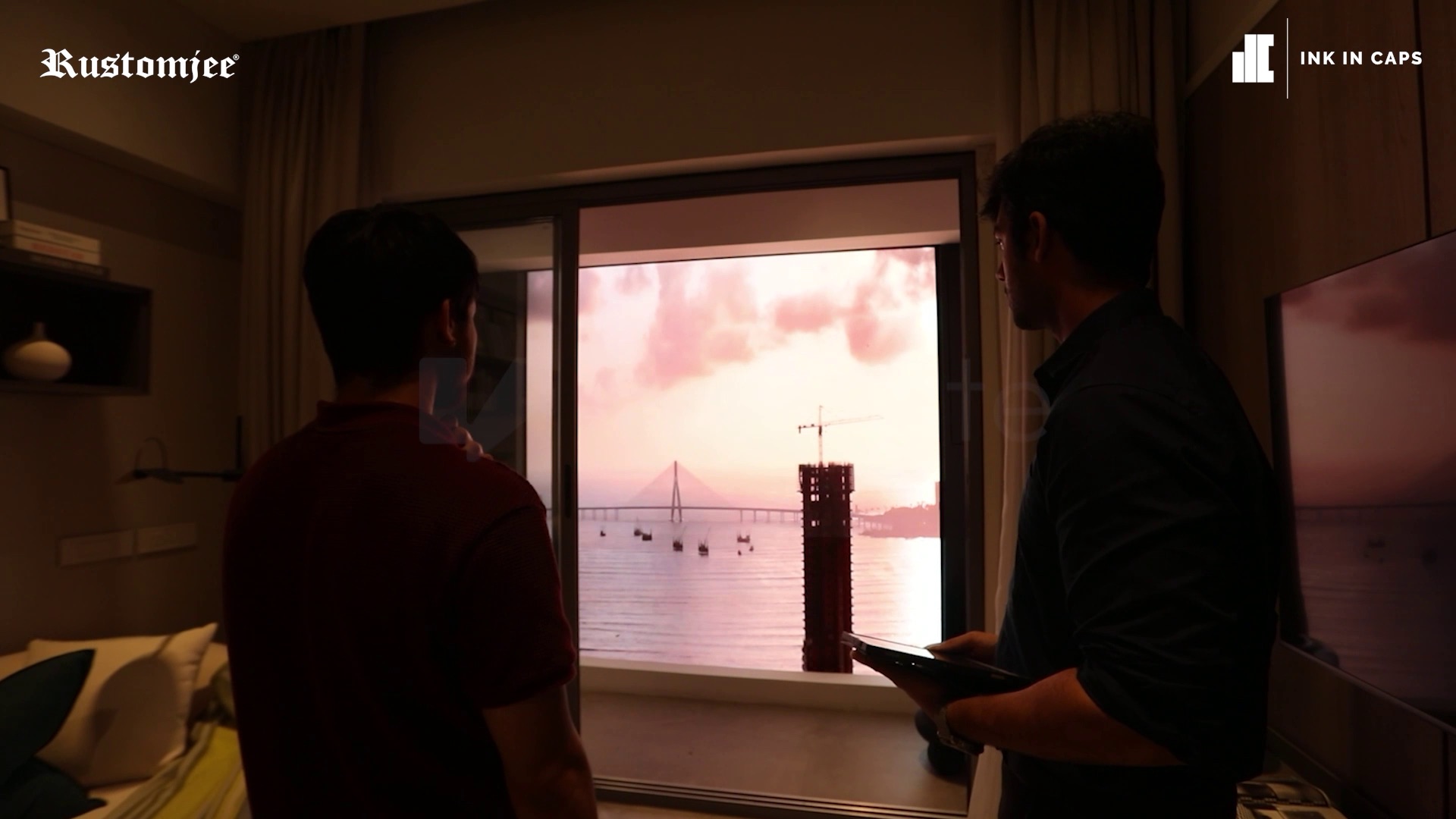
Location constraints matter more than most admit. If your sample flat is on the ground floor but you're selling units on the 15th, the view conversation becomes difficult. The light, the breeze, the sense of height—none of it translates. You end up describing rather than demonstrating.
Timing creates another pressure point. Sample flats become available late in the project cycle. By the time interiors are completed and staged, you've already lost months of potential sales conversations. Early-stage buyers make decisions based on floor plans and still-incomplete context.
For Chandivali Valley, these constraints would have been particularly limiting. The project's key differentiator—its proximity to a Miyawaki forest and positioning in a valley—couldn't be communicated from inside a sample flat. The environmental context that justified the premium positioning would remain invisible.
Where Virtual Tools Solve Different Problems
Virtual walkthroughs solve problems that sample flats can't address, but only if deployed correctly.
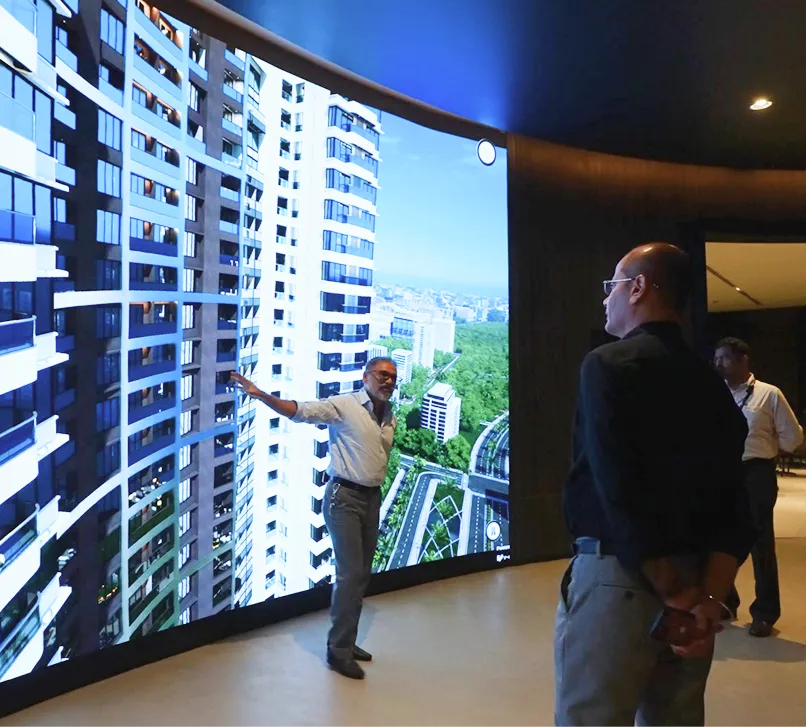
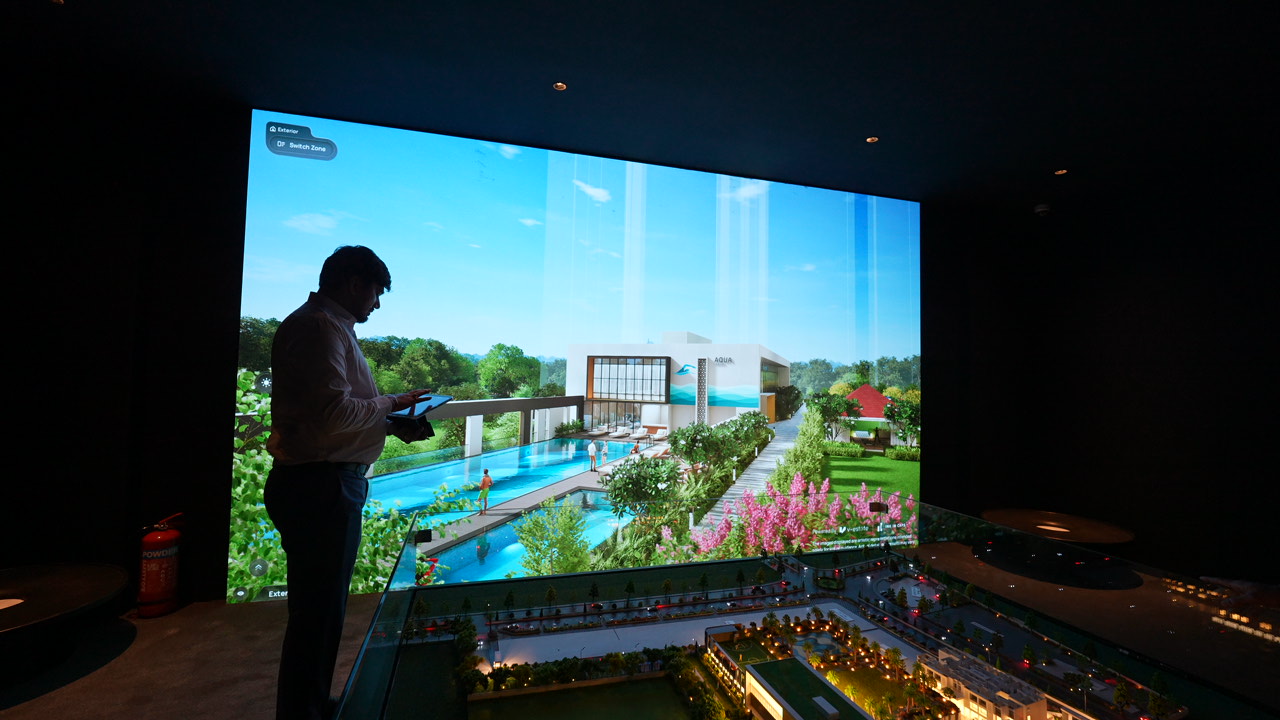
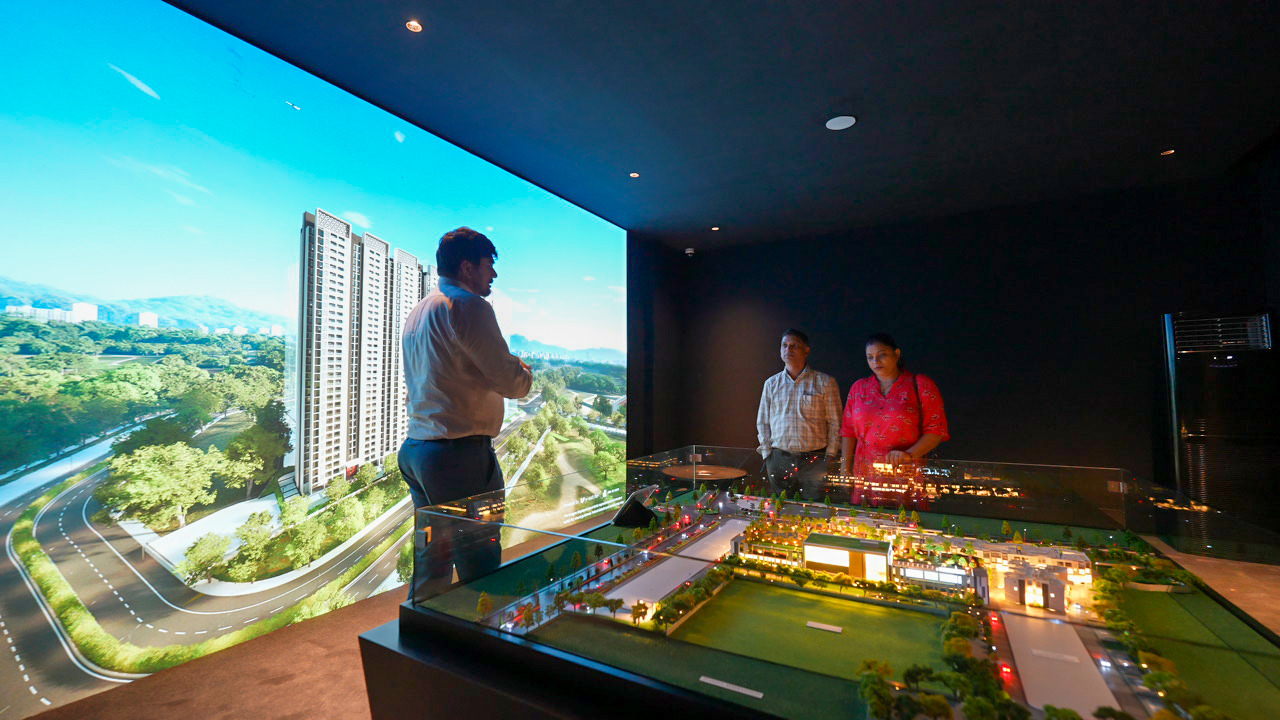
Nahar used V-estate to create what they called a "holistic understanding" before prospects ever stepped into the physical space. The technology ran on a large-format LED display—13.5 feet by 8.3 feet—in a dedicated AV room. Not VR headsets, not mobile phones, but a scale that allowed families to experience the visualization together.
The strategic value came from three specific capabilities:
Complete project context in one view. V-estate allowed prospects to see the entire land parcel, understand tower placement, and grasp how six wings across three towers were oriented so no units overlooked each other. This kind of comprehensive spatial understanding is impossible to communicate through floor plans or even scale models. The technology made the complex geometry of a hilltop development with significant elevation changes comprehensible in minutes rather than hours.
Environmental integration that justifies positioning. The Miyawaki forest, the Heritage Tree in the podium, the mountain views from different floors—these weren't amenities Nahar built. They were natural advantages that needed to be made visible. V-estate's rendering capability, built on Unreal Engine 5.4, showed prospects exactly what they'd see from their specific unit. The development team spent significant time modeling the adjacent forest not as a distant backdrop but as an integrated part of the living experience, because it was literally touching the property boundary.
View and customization variables. Different floors, different orientations, different times of day—V-estate let prospects explore variables that would be impossible to represent in a single physical space. Lighting changes, weather conditions, seasonal variations in the landscape. For a project selling "living in a valley," showing how morning light would hit the balcony or how the monsoon would transform the forest view became part of the value proposition.
The Sequencing That Makes Both Work
Where most developers fail isn't in choosing the wrong tool. It's in sequencing them incorrectly.
Nahar made the virtual experience mandatory and first. Every prospect, regardless of budget segment or readiness, went through the V-estate presentation before seeing anything physical. This wasn't a nice-to-have for interested buyers. It was the entry point.
The four-stage journey worked like this:
Stage one: AV room with V-estate. Prospects got comprehensive project understanding—location context, tower layout, amenity distribution, environmental features, and unit-specific views. A single sales executive could handle multiple families simultaneously because the tool did the explanatory work. This stage answered the macro questions: Why this location? How does the project work? What makes the positioning unique?
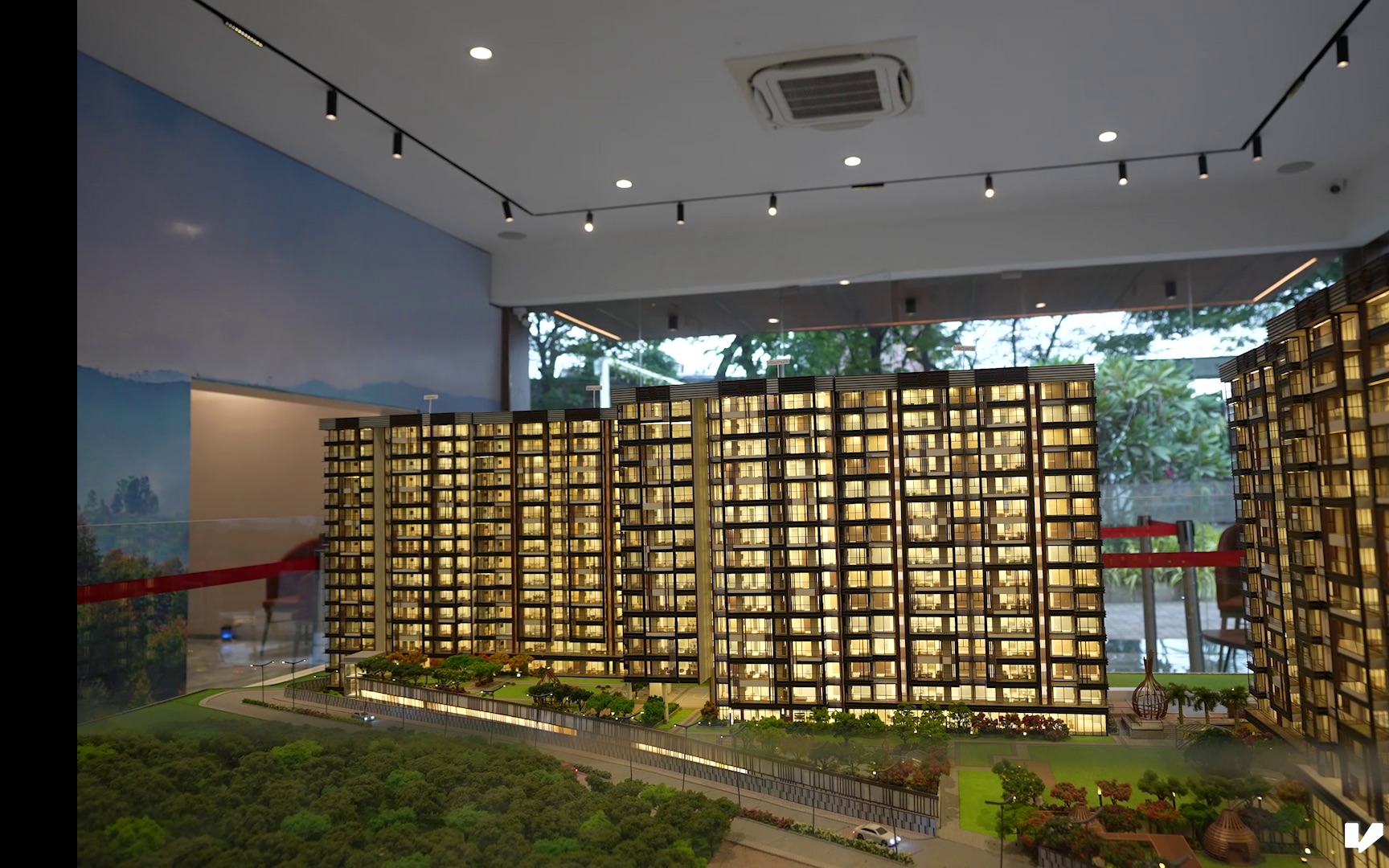
Stage two: Physical scale model. After digital immersion, prospects moved to a scale model. Now they weren't trying to understand basic project layout. They were validating what they'd seen digitally and getting a tangible sense of physical relationships between elements.
Stage three: 3BHK sample flat. The sample flat became about tactile experience and finish quality, not spatial understanding. Prospects arrived already knowing how their specific unit differed from the sample. The conversation shifted from "Can you imagine this?" to "Notice the finish quality and material specifications."
Stage four: Discussion rooms. By this point, prospects had context, validation, and sensory confirmation. The closing conversation happened with actual understanding rather than abstract promises.
This sequence solved a problem endemic in real estate sales: prospects making decisions before they truly understand what they're buying. It also dramatically reduced the explanatory burden on sales teams.
The Technical Requirements Behind Effective Virtual Visualization
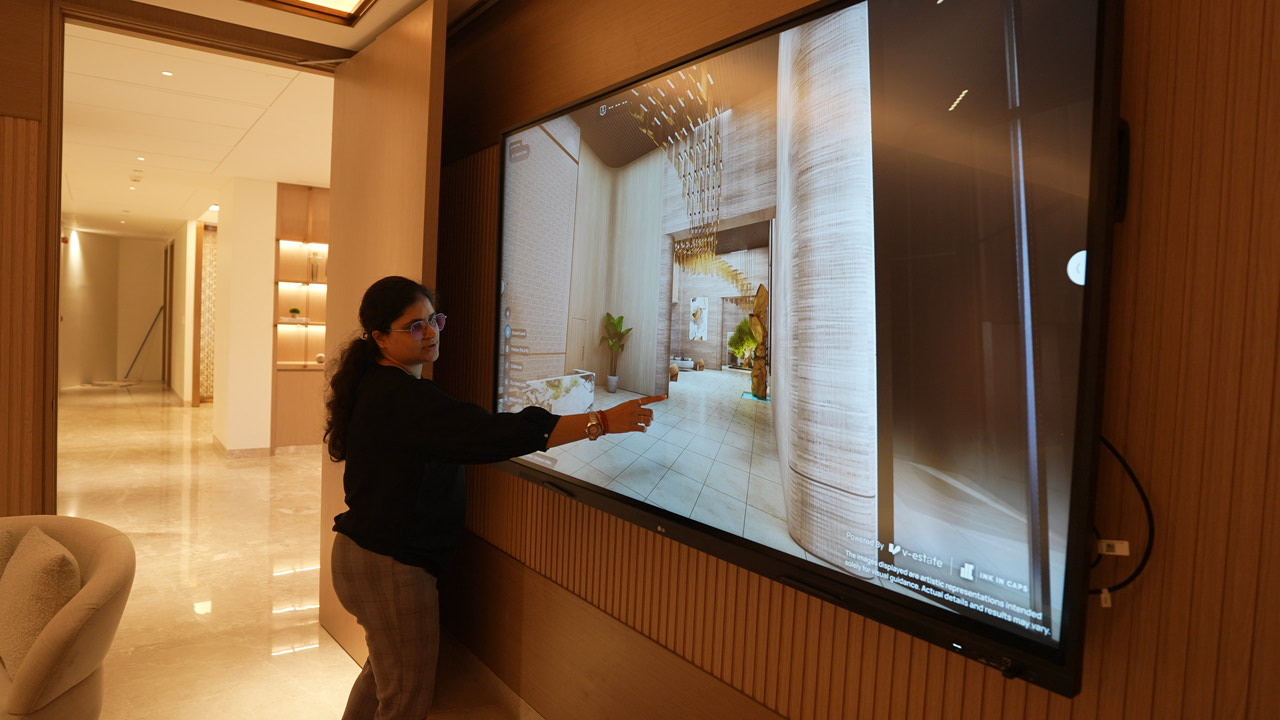
Virtual tools only create value if they cross the realism threshold. Prospects forgive stylization in brochures. They don't forgive it in immersive visualization tools.
Nahar's team encountered this through specific technical challenges. The Heritage Tree in the center of the podium initially had polygon counts too high to run in real-time. They rebuilt it entirely, reducing complexity while maintaining visual fidelity. The grass implementation required developing a new Procedural Content Generation system from scratch because standard foliage painting looked artificial and was too difficult to modify.
The lighting became what the development team called their "single biggest technical challenge." The natural environment—particularly mountain views from the podium—looked so compelling that it competed with the building visualization. Camera angles needed constant adjustment to balance showing both environmental advantages and architectural features.
These aren't abstract technical details. They represent the difference between visualization that convinces and visualization that raises doubt. If the grass doesn't move naturally, if reflections on glass facades don't behave correctly, if human figures look like video game characters—prospects notice and credibility suffers.
V-estate's foundation in Unreal Engine 5.4 gave Nahar's team access to rendering capabilities that made this level of realism achievable. Path tracing for specific shots, Lumen for real-time character rendering, extensive post-process adjustments for glass and reflections. The technology stack mattered because the output quality determined whether prospects trusted what they were seeing.
Implementation Realities: What Actually Takes Time
Technology vendors tend to understate implementation complexity. For marketing heads evaluating these tools, understanding the real timeline and coordination requirements matters.
Nahar's deployment took one and a half to two months, significantly longer than standard installations. The bottleneck wasn't the technology—it was coordination with the interior designers completing the AV room. The deployment team adopted a two-stage process: install the LED frame first so interior designers could work around it with exact dimensions, then return to install the panels once the room was finished.
The sales team training covered approximately 25 executives across closing, sourcing, and channel partner teams. Training wasn't just about operating the iPad controller. It included troubleshooting, understanding the PC-to-controller connection, and learning to use the tool as a sales instrument rather than just a demonstration device.
System stability became critical because the virtual experience was mandatory. Nahar implemented 24/7 on-site technical support through an AMC arrangement. Any downtime directly impacted sales operations. The system has remained operational since launch, but that stability required committed technical support infrastructure.
The Business Case: Where Combined Approach Delivers ROI
The financial justification for adding virtual visualization to an already-planned sample flat comes down to three factors:
Earlier sales cycle activation. Virtual tools become operational months before sample flats are ready. For Chandivali Valley, this meant having a comprehensive, impressive sales tool available while construction was still early-stage. The revenue impact of those additional months of effective selling can substantially offset technology costs.
Higher-quality leads entering the physical experience. When prospects reached the sample flat, they'd already self-qualified through the virtual experience. They understood the project, had seen their specific view, and had decided the positioning matched their requirements. The sample flat visit became a confirmation step rather than an exploratory one. Sales cycle length decreased because fewer physical site visits were required per conversion.
Market differentiation in commoditized segments. Chandivali as a micro-market hadn't seen this level of sales innovation. Nahar deliberately positioned the immersive experience as a market-first, creating differentiation in a segment where most projects compete primarily on pricing and basic amenity checklists. The experiential innovation became part of the brand positioning.
The cost structure matters. V-estate operates as an offline installation—the technology lives on-site rather than as a cloud service. For developers, this means upfront capital expenditure rather than recurring subscription costs. The calculation becomes: Does the combination of faster sales cycle activation, higher conversion rates, and market differentiation justify the investment compared to relying solely on sample flats that come online late?
For Nahar, executing on a premium positioning for a project whose primary differentiator was environmental context, the answer was clearly yes. The virtual tool made visible something physical staging couldn't capture.
What This Means for Developer Marketing Strategy
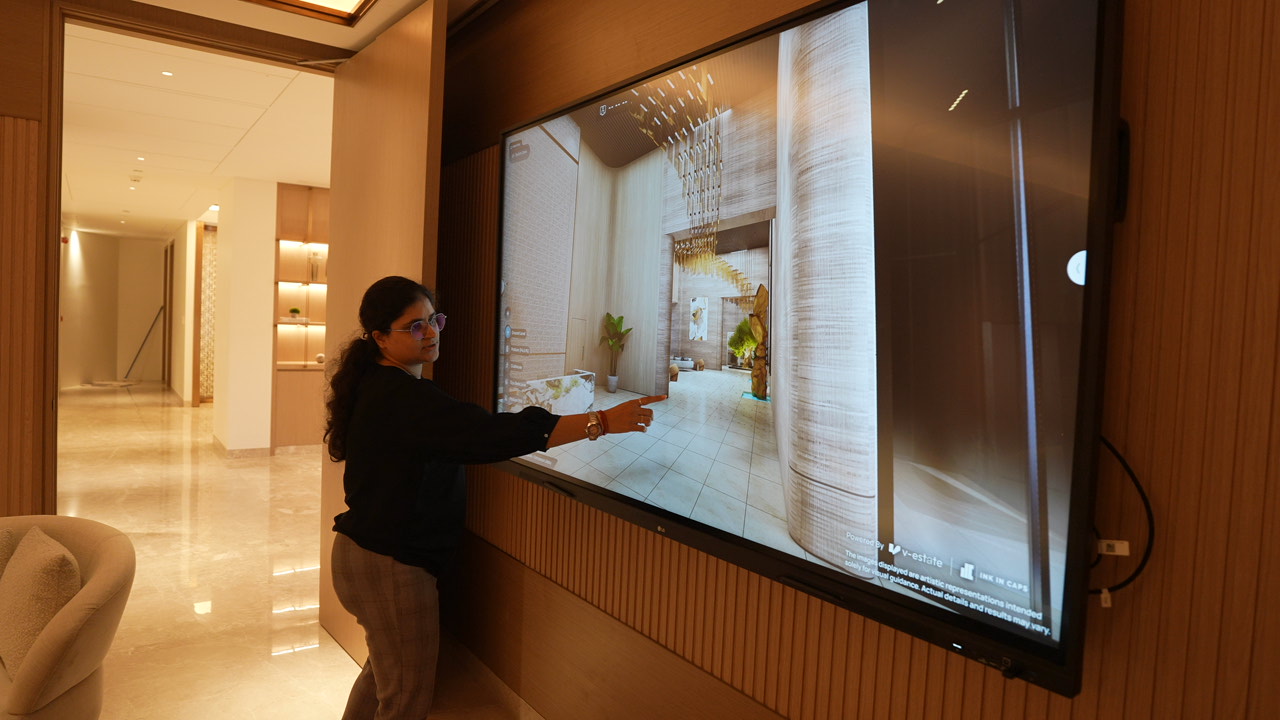
The Chandivali Valley approach suggests a principle worth considering: use each tool for what it actually does best, rather than forcing one to substitute for the other.
Virtual visualization excels at comprehensive context, variable demonstration, and early-cycle activation. It solves the problem of prospects making decisions without truly understanding spatial relationships, environmental integration, or specific unit attributes.
Physical sample flats excel at material quality demonstration, tactile experience, and emotional confirmation. They solve the problem of digital visualization never quite capturing how space feels to inhabit or how finishes appear under actual lighting.
The question for marketing heads becomes: What problems are we actually trying to solve in our sales process? If the answer includes helping prospects understand complex project positioning, demonstrating view variables, or activating sales before physical staging is ready, then relying only on sample flats leaves gaps.
The combined approach requires higher upfront investment and more complex coordination. But it solves problems that neither tool addresses independently. For projects where positioning depends on context that's difficult to communicate through traditional means, that combination isn't optional—it's how you make the positioning credible.
Nahar didn't replace their sample flat with virtual visualization. They used virtual visualization to solve problems the sample flat couldn't address, then used the sample flat to solve problems virtual visualization couldn't address. The sequencing and integration turned both into more effective tools than either would be alone.
That's not innovation for its own sake. It's using available tools strategically to solve real sales process problems. Which, ultimately, is what professional real estate marketing is supposed to do.